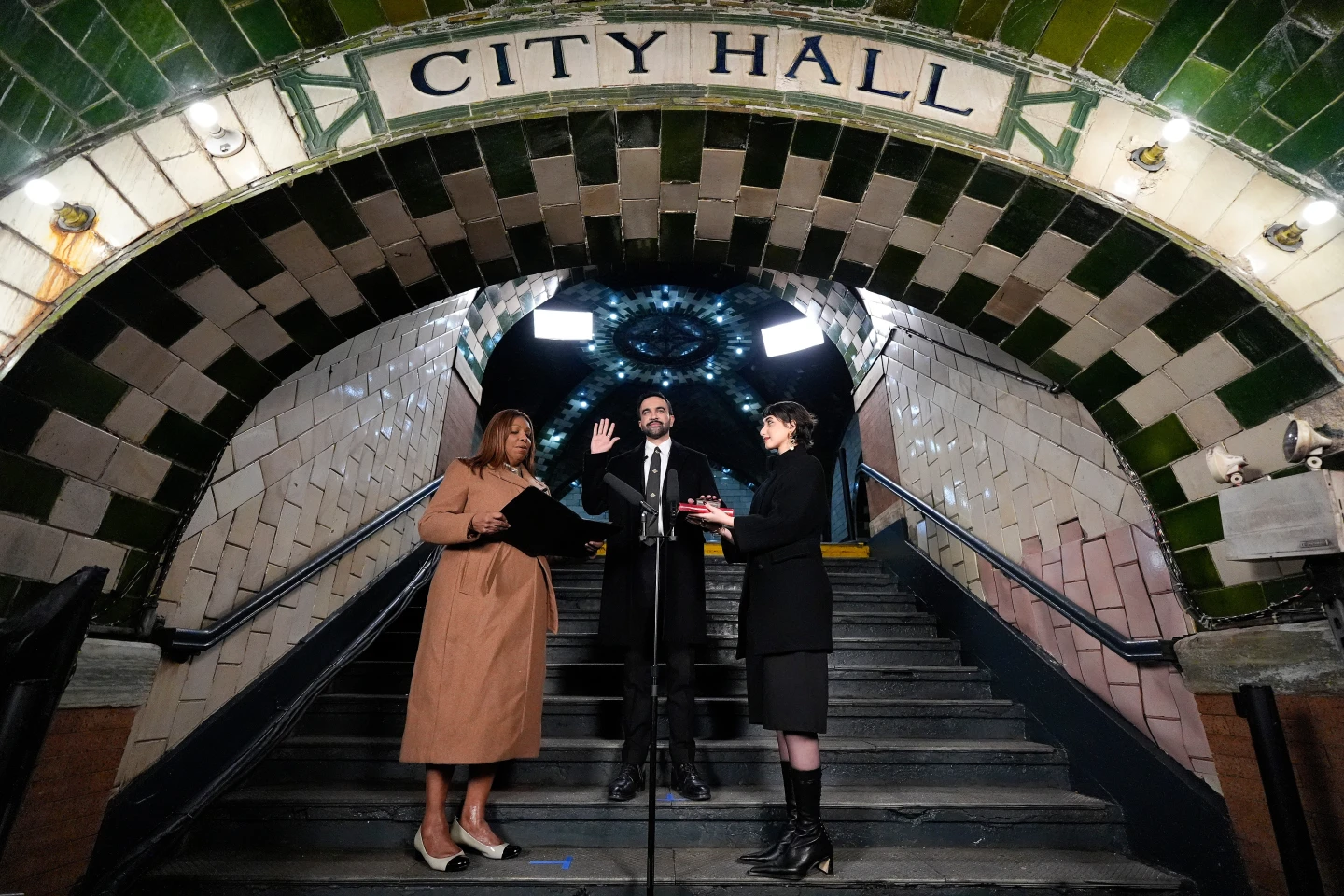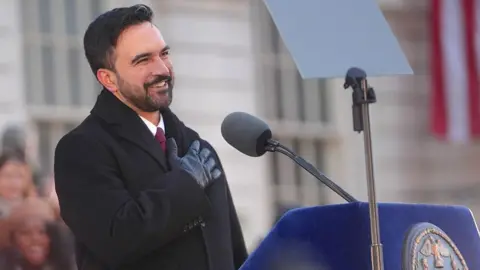
On the first freezing winter day of 2026, surrounded by thousands of cheering New Yorkers and progressive Democratic allies, New York City Mayor Zohran Mamdani pledged to tell a new story of our city.
City Hall will deliver an agenda of safety, affordability, and abundance - where government looks and lives like the people it represents, he told the crowd in his inaugural address.
It was the same message that propelled the 34-year-old Democratic socialist to an unexpected electoral victory in November. His pitch to lead the most expensive US city included big changes, such as universal childcare, free public buses and city-run grocery stores.
But the mayor is likely to encounter several challenges in trying to deliver on these promises, and he'll need to keep on board other important political stakeholders - beginning on his first full day in office.
He'll put all of his political and other might behind getting these things accomplished, said Patrick Egan, a professor of politics and public policy at New York University. But, he said, New York City is a big place, it's a complicated place, and so, all bets are off about whether these things can happen or not.
1. Paying for policy promises
Mamdani's lofty policy platform has centred on cost-of-living issues, including freezing rent hikes for subsidised housing units and providing universal free childcare.
He will be able to accomplish some of his policy goals on his own and without significant expense, government experts said. For instance, if he wants to freeze rents for subsidised housing, he can appoint people aligned with this policy on the city's rent control board.
But finding the funding to make other goals a reality when the state and city face budget shortfalls will prove complicated, government experts said.
If he wants to provide free bus service and free child care, these kinds of things cost money, said Robert Shapiro, a professor of international and public affairs at Columbia University. The big roadblock for the things he'd like to do are the state of the New York, the financial capacity of the state and the political willingness of the governor.
Mamdani has said some funding would come from new taxes. He believes taxes on the wealthy could raise as much as $9bn (£6.6bn), with pledges to raise the corporate tax rate from 7.25% to 11.5%.
But Mamdani needs the support of the state government to make tax changes.
The more moderate Democratic Governor Kathy Hochul endorsed him in the race last year as well as some of his affordability goals. But Hochul, who is making her own political calculations as she runs for re-election this year, has already indicated she may not support Mamdani's broader tax plan.
2. Avoiding White House intervention
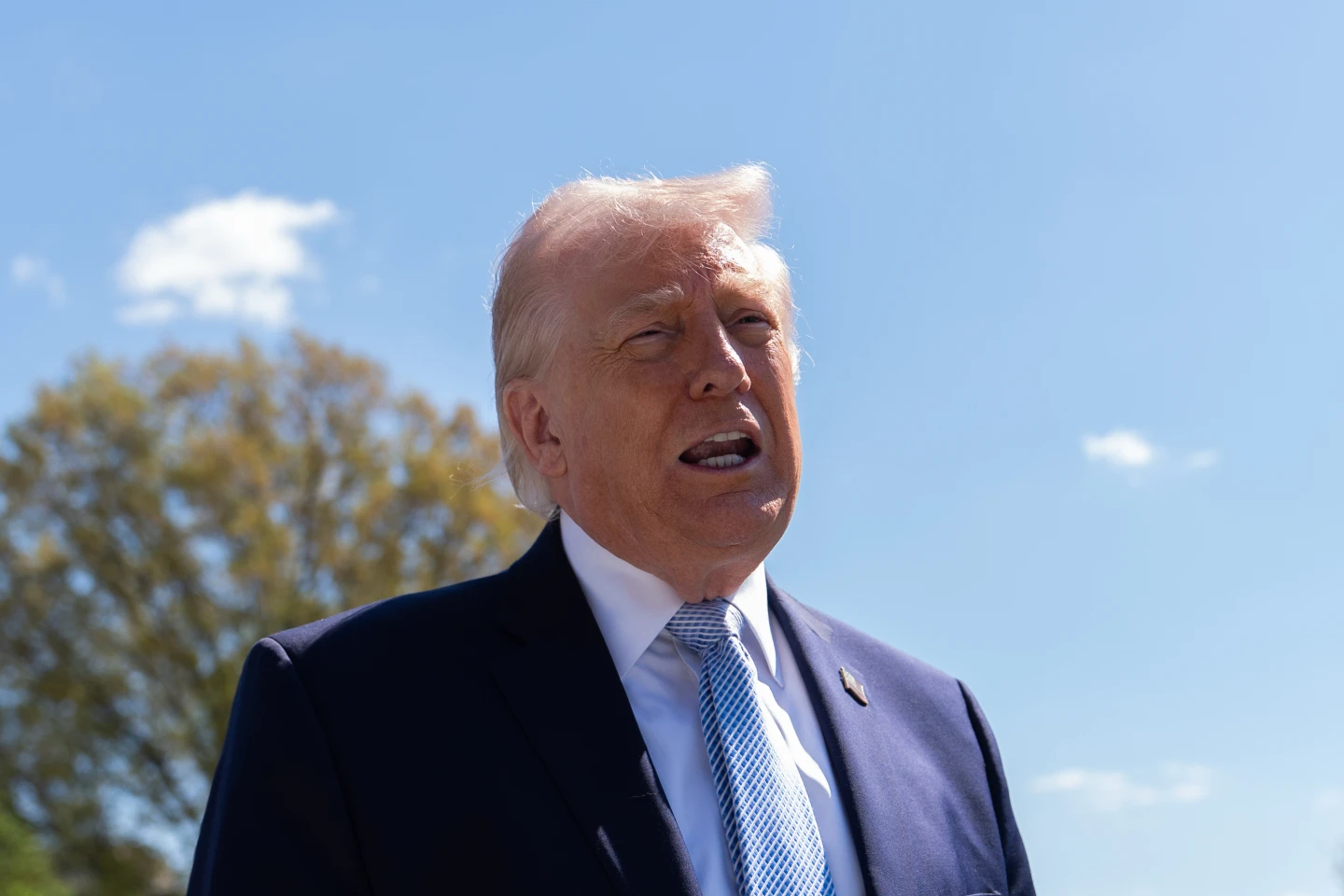
For weeks leading up to the New York City mayoral election, President Donald Trump took to social media and news briefings to attack Mamdani, a rising Democratic star, as a communist mayor who threatened the future of the largest US city.
Trump threatened to withhold billions of federal dollars to the city if Mamdani was elected.
But the first meeting between the future mayor and the president last November proved much more amicable than expected. The two men frequently smiled at each other and shared praise, with Trump telling Mamdani he was confident that he can do a very good job.
Still, the two politicians' diametrically opposed policy positions could lead to conflict as Mamdani takes over City Hall. Immigration may be a point of tension.
For now, New York has not been a target of Trump's efforts to send in National Guard troops, as he has done in Democratic-led cities across the US in response to anti-immigration protests.
But the Trump administration did ramp up immigration raids in New York as part of its enforcement efforts in several cities.
Meanwhile, the mayor pledged in his victory speech that New York would remain a city of immigrants, a city built by immigrants, powered by immigrants, and ... led by an immigrant.
3. Getting business leaders on board
Mamdani's shock victory in the New York City Democratic mayoral primary in June sent Wall Street leaders into a frenzy.
Some business leaders threatened to leave the city, while others spent millions behind the scenes to try to coalesce support around other mayoral candidates.
But as Mamdani maintained his status as the race frontrunner, some of these attitudes began to shift. The now-mayor reached out to his opponents in the business world to hear their concerns.
Mamdani pledged to meet with leaders including JPMorgan Chase CEO Jamie Dimon, who later said he would offer his help if Mamdani was elected.
Mamdani also met with real estate developer Jeffrey Gural, who described him as personable and smart.
Still, Gural and others in the business community continue to express their concerns that the 34-year-old lacks the experience to lead the nation's largest city - and that his plans to raise taxes on corporations and wealthy people will drive some of them to leave New York.
Mr Egan said it remains to be seen whether a spirit of cooperation will persist between business leaders and Mamdani as he forges ahead with an agenda that is ideologically at odds with some of their goals.
Any mayor of New York needs cooperation from business leaders, and in particular finance and real estate that play big roles here in New York City, he said.
4. Addressing public safety
As mayor, Mamdani will face a perennial challenge for New York City leaders, tackling crime and maintaining a sense of safety for New Yorkers.
Like many big cities, New York saw an uptick in crime during the Covid pandemic, though in 2025, the rate of homicides and shootings in the city fell to a near-record low.
This decline in crime gives Mamdani a bit of wiggle room to think creatively about public safety in New York, including improving social services and support, Mr Egan said.
Mamdani has promised to create a Department of Community Safety that would invest in mental health programmes and crisis response as well as deploy outreach workers to subway stations across the city.
Outgoing Mayor Eric Adams' administration also sent outreach workers to subway stations and established other housing and mental health programmes. But some experts and community leaders say those efforts failed to adequately address homelessness and mental health crises.
Democratic strategist Howard Wolfson, a counselor to former New York City Mayor Mike Bloomberg, said he and others will judge Mamdani first and foremost on how the city is policed, and how shoplifting and quality of life crimes are handled.
Mamdani won over some business leaders and members of the public with his decision to ask Police Commissioner Jessica Tisch, who served in Adams' administration, to stay on as police chief.
Public safety is really kind of the prerequisite for success or failure, Mr Wolfson previously told the BBC. I think if people feel safe here, they can tolerate an awful lot of other challenges. And if they don't, then there's not a lot of other challenges that they will be willing to tolerate.