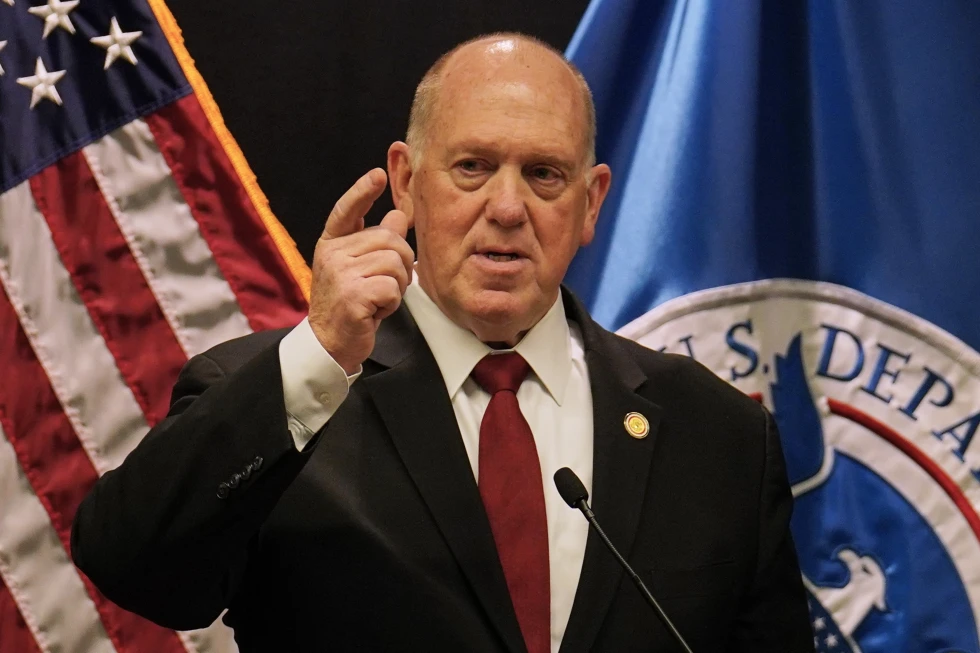
WASHINGTON (RTW News) — In a significant development, White House border czar Tom Homan announced a unified enforcement strategy for U.S. Immigration and Customs Enforcement (ICE) operations in Minnesota, aiming to address concerns over aggressive immigration enforcement tactics that have sparked internal conflict among federal agencies.
Since ICE's establishment in 2003, the agency has primarily focused on targeted enforcement, which entails carefully planned operations aimed at specific individuals, in contrast to broader, more chaotic sweeps that have been prevalent in certain areas under the direction of the Border Patrol.
The implications of agency friction on the new leadership are not entirely clear, but this modification underscores the ongoing tensions between ICE and Border Patrol regarding the execution of President Trump's mass deportation agenda.
This new strategy emerges as ICE faces dwindling public support, with increasing numbers of Americans expressing concerns over the agency's perceived aggressiveness in enforcing immigration laws. Congressional Democrats are intensifying their scrutiny of the Department of Homeland Security, advocating for a reevaluation of immigration enforcement practices.
While declaring the operation's success, Homan admitted imperfections, indicating that consolidating operations under ICE’s enforcement unit aligns with efforts to ensure compliance with established protocols. “We made this operation more streamlined and established a unified chain of command, so everybody knows what everybody’s doing,” he stated at a Minneapolis news conference.
Simultaneously, the Border Patrol's heightened role in interior enforcement has exacerbated tensions within ICE. Former officials have noted that the contrasting missions of the two agencies lead to confusion and operational inefficiencies. Gregory Bovino, a former Border Patrol official, acknowledged that heavy-handed tactics employed by Border Patrol often undermine ICE's more focused approach to immigration enforcement.
In essence, this transition indicates an acknowledgement of the necessity for careful planning and investigation in enforcement actions, a shift Homan is advocating to reinstate professionalism amid heightened scrutiny.
As ICE's operational presence remains significant, the atmosphere in Minneapolis continues to be tense, exemplified by an incident where ICE officers mistakenly pulled over a local driver, leaving them bewildered as operations continue to unfold.