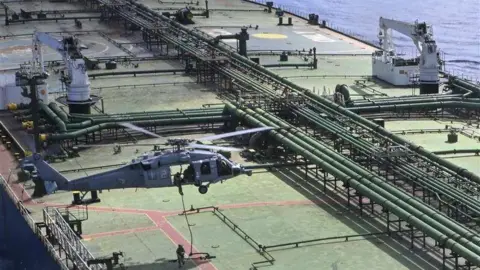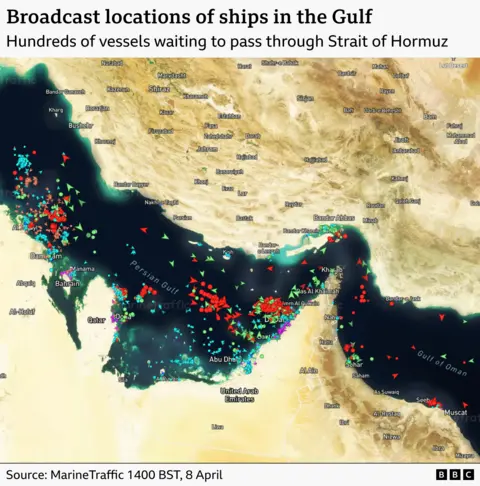
The Strait of Hormuz has become a focal point of the US-Israel war with Iran after Tehran effectively choked off one of the world's most important shipping lanes, carrying about a fifth of the world's oil and liquefied natural gas. A two-week ceasefire was agreed on Tuesday evening on the condition that 'safe passage' through the strait is guaranteed, but BBC Verify analysis shows only a few vessels have since crossed.
The disruption in the strait has sent shock waves across the global economy, pushing up energy prices and exposing how reliant international supply chains are on the strait, which is only about 33km wide at its narrowest point. It is essential for transporting chemicals needed for various products, including microchips and pharmaceuticals.
While the price of oil has fallen in response to news of the ceasefire, shipping analysts caution that minimal crossings are expected. Lars Jensen from Vespucci Maritime noted that many shipping lines are seeking reassurances on transit protocols that remain unclear. Since the ceasefire was announced, ships in the Gulf received warnings from Iran's navy that any unapproved vessels would be targeted and destroyed.
By 14:00 BST on April 8th, only three tankers had passed through the strait, significantly down from an average of 138 vessels before the conflict began. Analysts express skepticism regarding a significant return of traffic, suggesting that most crews are still reluctant to navigate the area even with a ceasefire in place.
In addition, maritime businesses face the potential requirement to pay tolls to Iran for safe passage, which could complicate the matter due to existing US sanctions prohibiting payments to Iran. With nearly 800 ships reportedly stuck in the region, uncertainties regarding the ceasefire's longevity and the presence of potential sea mines continue to loom over regional trade, impacting not just shipping but the global economy as well.
The disruption in the strait has sent shock waves across the global economy, pushing up energy prices and exposing how reliant international supply chains are on the strait, which is only about 33km wide at its narrowest point. It is essential for transporting chemicals needed for various products, including microchips and pharmaceuticals.
While the price of oil has fallen in response to news of the ceasefire, shipping analysts caution that minimal crossings are expected. Lars Jensen from Vespucci Maritime noted that many shipping lines are seeking reassurances on transit protocols that remain unclear. Since the ceasefire was announced, ships in the Gulf received warnings from Iran's navy that any unapproved vessels would be targeted and destroyed.
By 14:00 BST on April 8th, only three tankers had passed through the strait, significantly down from an average of 138 vessels before the conflict began. Analysts express skepticism regarding a significant return of traffic, suggesting that most crews are still reluctant to navigate the area even with a ceasefire in place.
In addition, maritime businesses face the potential requirement to pay tolls to Iran for safe passage, which could complicate the matter due to existing US sanctions prohibiting payments to Iran. With nearly 800 ships reportedly stuck in the region, uncertainties regarding the ceasefire's longevity and the presence of potential sea mines continue to loom over regional trade, impacting not just shipping but the global economy as well.