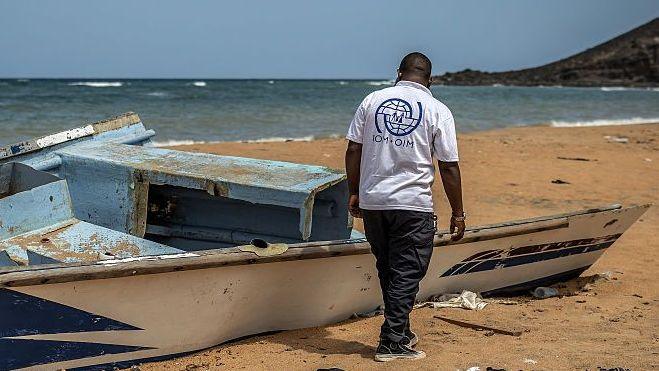
A boat carrying 305 migrants from Djibouti to Yemen capsized near the port town of Obock, killing 139 people, including 15 children, early Thursday night. The rescue operation, led by the International Organization for Migration, managed to save 82 survivors, all of whom are Ethiopian nationals, and has supplied them with medical care and help to reconnect with their families.
"This is a devastating loss of life," Alexandre Coissac, the IOM Djibouti mission chief, said. He described the tragedy as a stark reminder of the dangers migrants face when they attempt to find a new life across the Gulf of Aden.
The incident follows a pattern of deadly crossings; in 2025, more than 900 people died or went missing on the same route amidst an 18% rise in attempted crossings. March 2026 saw another tragedy, with nine killed and 45 missing after a similar incident.
The route from Ethiopia to Djibouti—over 20,000 movements recorded since 10 September—remains a perilous path for those fleeing insecurity, poverty, and the impacts of climate change. Yemen, still mired in a decade‑long civil war, draws many displaced peoples, including thousands who have fled to Djibouti to escape the fighting between Houthi forces and the Saudi‑backed government.
Local authorities in Djibouti are arranging burials for the dead, while the survivors receive comprehensive aid from the UN agency, which stresses its collaboration with local partners to prevent further loss of life at sea and on land.