In brief
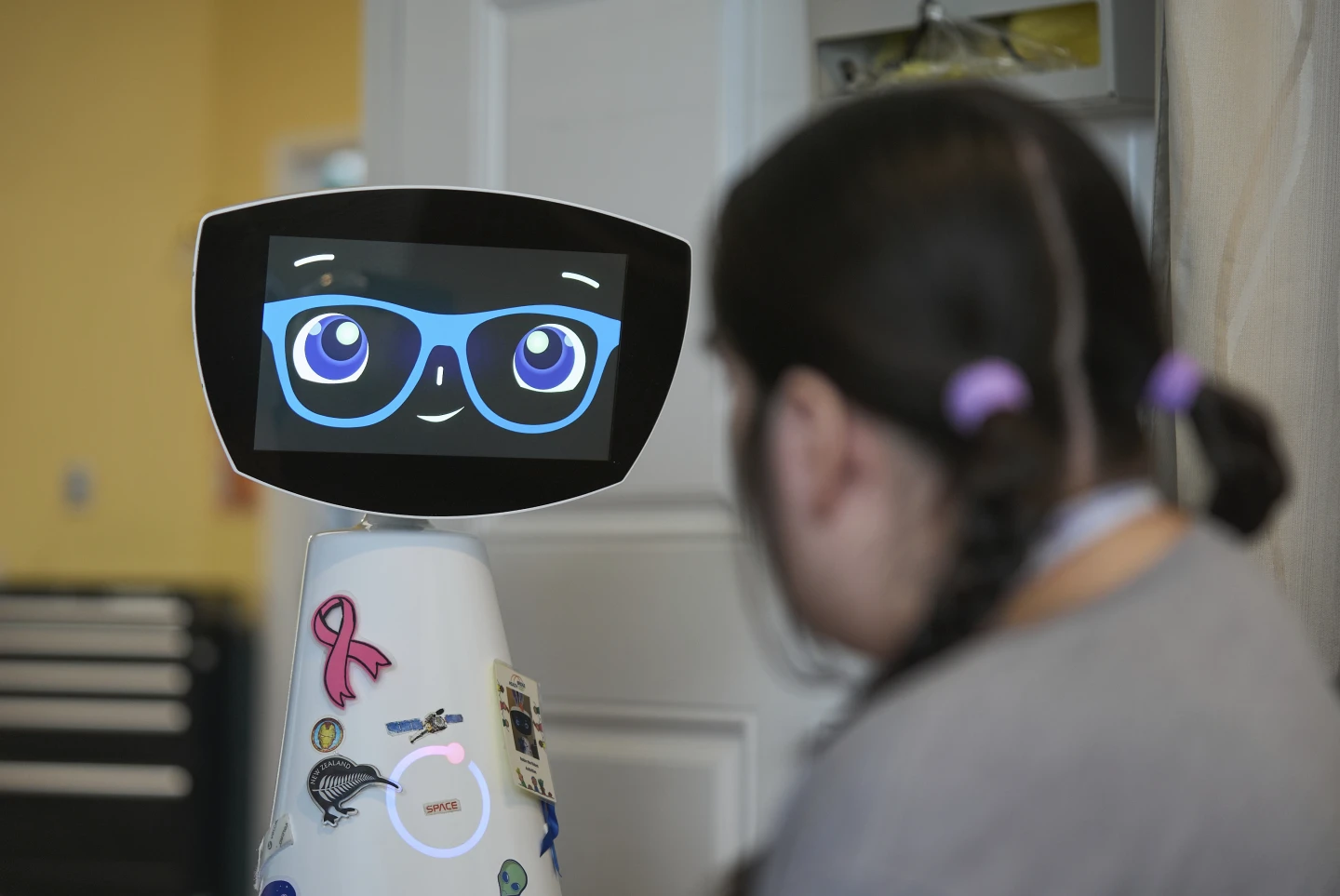
At UMass Memorial Children’s Medical Center, Robin, a 4-foot tall therapeutic robot, interacts with young patients like Luca, easing their fear and anxiety through engaging activities and companionship. Developed by Expper Technologies, Robin is part of a growing trend in which AI technology is utilized in healthcare settings to augment patient care, address staffing shortages, and alleviate the emotional burden on medical staff while delivering vital assistance and entertainment to pediatric patients.
Just days after Meagan Brazil-Sheehan’s 6-year-old son, Luca, was diagnosed with leukemia, they encountered something unexpected at UMass Memorial Children’s Medical Center: Robin the Robot. Luca, how are you? Robin asked in a cheerful voice, bringing a spark of joy to the young boy in a challenging time.
Robin is a state-of-the-art, artificial intelligence-powered therapeutic robot designed to provide emotional support to pediatric patients and alleviate the pressures faced by medical staff. Developed by Expper Technologies, the robot has become a familiar presence in healthcare facilities across the U.S., from California to Massachusetts.
According to Karen Khachikyan, CEO of Expper Technologies, Robin helps bridge the gap when nurses are overworked and can’t always engage with young patients. With its friendly demeanor and ability to remember names and favorite activities, Robin can brighten the day of children, making hospital stays less daunting.
On a recent visit, Robin played music, held dance parties with patients, and even played games, providing not just companionship but laughter as well. Staff members noted that patients often light up with joy when Robin arrives, showcasing its positive impact.
As Robin interacts with children and families, it is also gathering valuable data to enhance its capabilities, with hopes of evolving into a more autonomous entity that can further assist medical personnel by monitoring patients' vitals and providing vital care activities in the future.
The use of robots like Robin in healthcare symbolizes a revolutionary step towards integrating technology into medical environments, aiming not only to improve patient care but also to eliminate feelings of loneliness that many children experience during hospital visits. As evidenced by the heartwarming interactions with children, Robin is proving to be an indispensable part of pediatric healthcare.