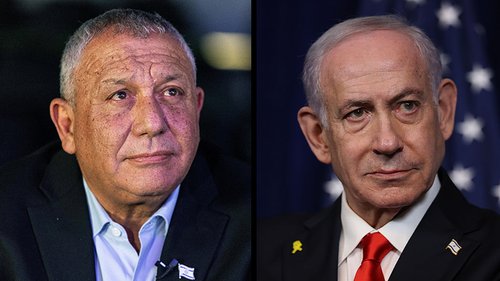
In brief
The 2026 Israeli election resulted in Netanyahu’s right‑wing bloc winning 53 seats and the opposition 48, while Arab parties are projected to hold 19 seats—a new record. No majority has emerged, and final counts including double‑envelope ballots are still pending. Market reactions have been sharp as investors await coalition negotiations.
In a vote that will shape Israel’s next government, the 2026 parliamentary election left no single party with an outright majority, as turnout hit a record 77.7% and the tally of Netanyahu’s right‑wing bloc stood at 53 seats. The opposition led by former military chief Gadi Eisenkot is projected with 48 seats, while Arab parties—Joint List and Ra’am—are poised to secure a record 19 seats.
Confirmed so far
The Central Elections Committee has counted more than five million votes, leaving approximately 500,000 double‑envelope ballots yet to be tallied. Netanyahu’s Likud is projected to win 26 of the 120 Knesset seats, making him the largest single party, and the total of 53 seats places his bloc just shy of the 61 needed for a majority. The 17-seat figure for the Arab bloc has been revised to 19 as the count progressed. Election officials confirm that the vote is the highest turnout since 1999, with Palestinian citizens of Israel voting at about 80% of registered voters. Benjamin Netanyahu told supporters that his bloc held a decisive majority among the Jewish and Zionist public, saying, “We must establish a strong, right‑wing, national government.”
On the opposition side, Gadi Eisenkot posted on social media:
The preliminary poll results point to complete distrust in Netanyahu and the government of Oct. 7, of the Zionist majority and the majority of Israeli citizens. If these are the final results, this is a victory for the statist‑Zionist majority in Israel.
The Israeli market has reacted sharply. Tel Aviv stocks fell, with the TA‑35 index down 1.81%, and the shekel weakened to 3.128 per dollar. Analyst Gad Lior explained the sell‑off:
The sell‑off was driven by political uncertainty and concerns that another Netanyahu‑led government might again struggle to address economic challenges, particularly the high cost of living. The fears of a renewed war with Iran also weighed on investor sentiment.
Unconfirmed developments
Final results are expected by Thursday evening, when the remaining ballots will be counted. It remains unclear whether Netanyahu or Eisenkot will seek coalition partners among Arab parties or cross‑bloc alliances. President Isaac Herzog will consult party leaders on who should become prime minister once the official counts are announced. If no coalition is formed, the Knesset may be dissolved, prompting a new election. The outcome will hinge on how the pivotal Arab‑led parties negotiate their terms, which could bring Netanyahu’s bloc to a majority or enable a new government that includes them.