In brief
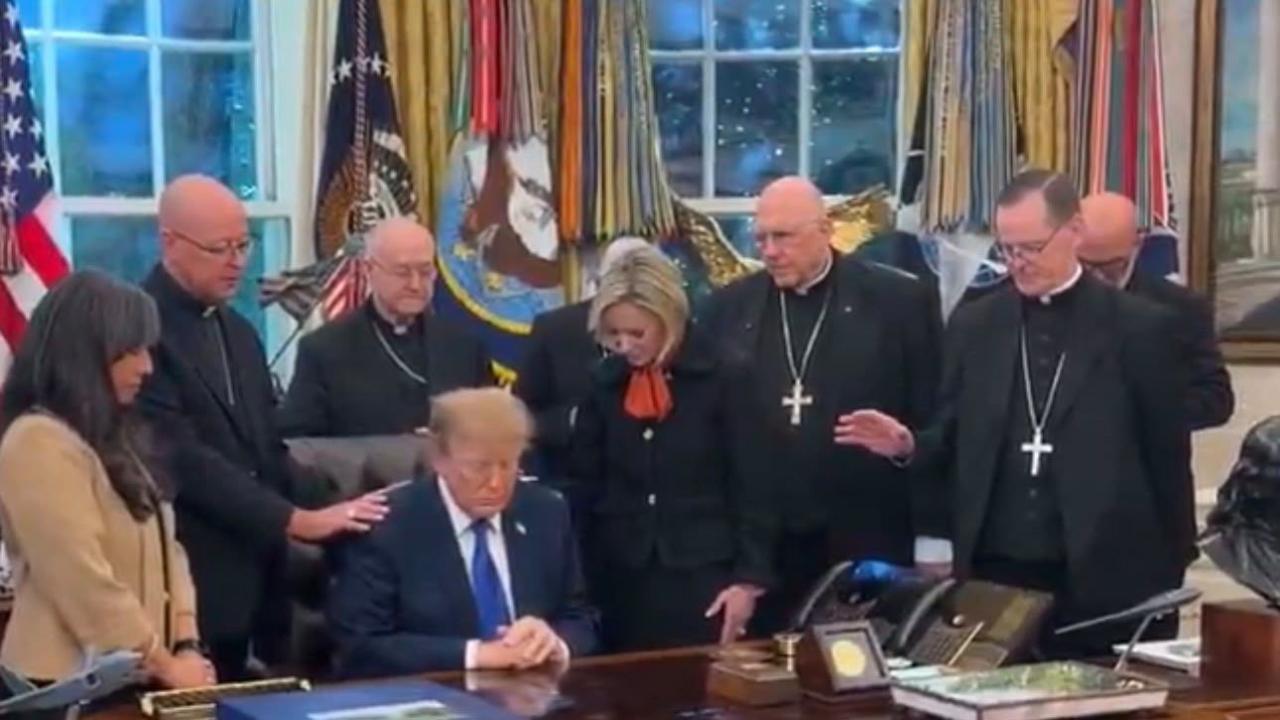
When images leaked of a group of Catholic bishops praying with former President Donald Trump in the Oval Office, the leaders felt the meeting had turned into a political statement. Archbishop Jeffrey Grob and Bishop William Joensen expressed regret, explaining they had not intended to endorse any party and had been surprised by the public dissemination. Their comments come amid mixed views of Trump among U.S. Catholics and a broader debate over his administration’s immigration policies. The incident highlights how religious and political lines can blur when official meetings are televised, and it could influence Catholic voters ahead of the November midterm elections.
A Brief of the Meeting’s Aftermath
Two Catholic bishops who met former U.S. President Donald Trump in the Oval Office feel the event was compromised by the media coverage that followed. Their apology came after a video clip, released by the president’s communications team, showed the bishops standing in prayer beside Trump at the Resolute Desk.
Archbishop Jeffrey Grob of Milwaukee said he believed the gathering was a private discussion on immigration and clergy visas, not a platform for partisan politics. He added that after the 90‑minute meeting with White House officials, the bishops were invited into the Oval Office for a brief prayer session.
Bishop William Joensen of Des Moines clarified that the officials called the meeting to address “issues such as immigration, visas for international clergy and the exploitation of vulnerable poor persons.” He further stated: “We never intended this to serve as a political endorsement, nor did we allow public release of any footage.”
The bishops’ statements reflect growing tension. While polls show roughly 55 % of U.S. Catholics supported Trump during his 2024 campaign, recent figures indicate a decline in approval and an increase in support for Democratic congressional candidates among the Catholic community.
White House spokesperson Taylor Rogers defended the president’s relationship with the Catholic community, describing Trump as a strong champion for Catholic values. Yet the bishops’ reflections underscore the sensitive intersection of faith and politics—especially as the White House’s immigration policies continue to create backlash among religious leaders.
The bishops’ public apologies signal a broader caution among faith leaders about how closely they should approach political figures, especially with moments that could be misconstrued as overt endorsements. Their visibility ahead of the November midterm elections may influence how Catholic voters, a key demographic for both parties, view the intersection of religious conviction and political agenda.