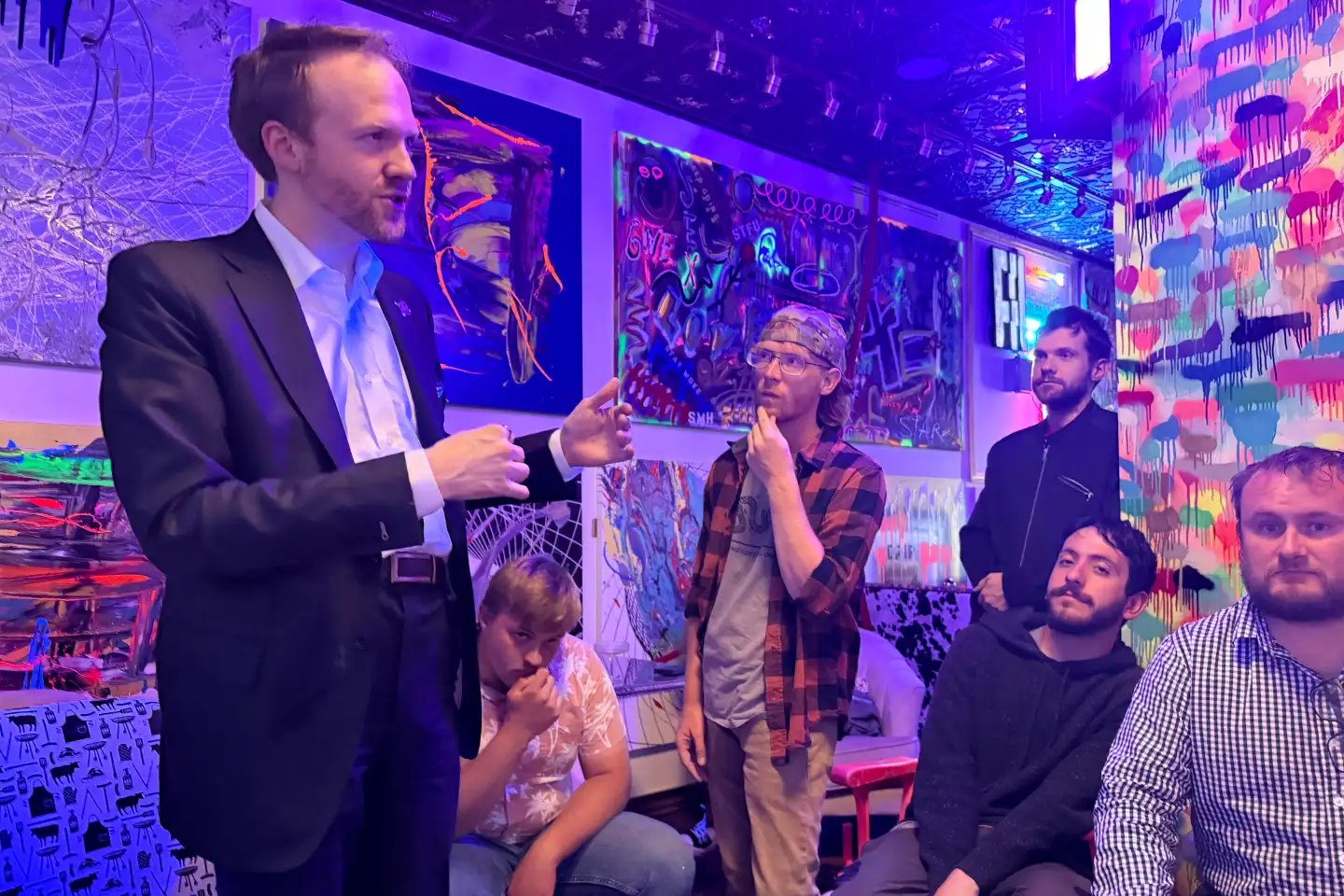
COVINGTON, Ky. — In the eclectic glow of dEcORa bar, young Republicans gathered recently, their initial fervor for Donald Trump's presidency curdling into palpable frustration. Over craft beers and neon-lit cocktails, more than a dozen supporters debated the Trump administration they once hailed with optimism, now viewing it as a betrayal of their hopes. 'I absolutely do not regret voting for Trump in 2024,' said Nathaniel Showalter, 34, his voice tinged with resignation. 'I can't wait for him to get out of office.'
The gathering revealed a growing sense of abandonment among younger conservatives, who feel the GOP establishment has embraced Trump’s policies rather than distanced itself. 'There seems to be a concerted effort to keep the next generation out on the right,' said TJ Roberts, a 28-year-old state representative and group leader. 'This isn't the party we voted for—it's why we need a change in leadership.'
Their disillusionment centered on Trump’s Iran policy, which they call 'a complete betrayal of his promises.' The war, they argue, prioritizes corporate donors and Israel over American interests. Logan Edge, a 30-year-old gun lobbyist, mimicked Trump’s rhetoric while criticizing his alignment with Israeli billionaires: 'Oh Miriam, she’s over there, she loves Israel, maybe more than America.' The group’s anger spilled into personal reflections: Andrew Cooperrider, 33, described rejecting his son's military enlistment plans amid fears of sending him into 'wars for these psychopaths.'
The sense of betrayal deepened with the assassination of Charlie Kirk, the conservative activist they saw as their 'lone spokesperson' in Washington. 'It’s why we need a change in leadership,' emphasized Roberts, echoing broader concerns about the party’s direction. The defeat of Rep. Thomas Massie—a Kentucky representative who openly defied Trump—further highlighted tensions, proving the president's immense influence over party politics. 'Trump started the old order's downfall,' noted Cooperrider, 'but he’s keeping it alive now.'
Participants debated whether Trump’s second term could salvage the party’s future. While some like Roberts celebrated Trump’s 'culture shift,' others like Elijah Drysdale condemned his broken promises: 'This isn’t the party that we want, or thought we were voting for.' Though most opposed voting for Democrats, Henry Hecht—26, a libertarian—tentatively asked, 'What’s he doing here?' as Cooperrider jokingly urged, 'Get him out of here, somebody get the log!'
The group’s anxiety about future conflicts was visceral. 'Why do my friends have to be over there?' asked Angel Figueroa, 27, a veteran. 'It would devastate me to see one of my friends getting bombed.' For many, the possibility of a military draft—a topic they’d never have considered a decade ago—speaks to a deeper crisis: 'Eventually that cycle has to break,' said Roberts. 'We can’t fight the left until we defeat these old, boomer Republicans.'
As debates intensified over whether to mobilize against 'corporate bailouts' and 'aid to Ukraine,' the conversation underscored a stark generational split. The young Republicans argued the GOP has become trapped in its own 'entitlement' while facing an increasingly alienated youth base. 'The left is organized,' said Edge. 'We’re a little lost.' Yet with their confidence in the party’s future eroding, they warned that without leadership changes, 'we’re going to live a shorter, less prosperous life than your parents.'}
The gathering revealed a growing sense of abandonment among younger conservatives, who feel the GOP establishment has embraced Trump’s policies rather than distanced itself. 'There seems to be a concerted effort to keep the next generation out on the right,' said TJ Roberts, a 28-year-old state representative and group leader. 'This isn't the party we voted for—it's why we need a change in leadership.'
Their disillusionment centered on Trump’s Iran policy, which they call 'a complete betrayal of his promises.' The war, they argue, prioritizes corporate donors and Israel over American interests. Logan Edge, a 30-year-old gun lobbyist, mimicked Trump’s rhetoric while criticizing his alignment with Israeli billionaires: 'Oh Miriam, she’s over there, she loves Israel, maybe more than America.' The group’s anger spilled into personal reflections: Andrew Cooperrider, 33, described rejecting his son's military enlistment plans amid fears of sending him into 'wars for these psychopaths.'
The sense of betrayal deepened with the assassination of Charlie Kirk, the conservative activist they saw as their 'lone spokesperson' in Washington. 'It’s why we need a change in leadership,' emphasized Roberts, echoing broader concerns about the party’s direction. The defeat of Rep. Thomas Massie—a Kentucky representative who openly defied Trump—further highlighted tensions, proving the president's immense influence over party politics. 'Trump started the old order's downfall,' noted Cooperrider, 'but he’s keeping it alive now.'
Participants debated whether Trump’s second term could salvage the party’s future. While some like Roberts celebrated Trump’s 'culture shift,' others like Elijah Drysdale condemned his broken promises: 'This isn’t the party that we want, or thought we were voting for.' Though most opposed voting for Democrats, Henry Hecht—26, a libertarian—tentatively asked, 'What’s he doing here?' as Cooperrider jokingly urged, 'Get him out of here, somebody get the log!'
The group’s anxiety about future conflicts was visceral. 'Why do my friends have to be over there?' asked Angel Figueroa, 27, a veteran. 'It would devastate me to see one of my friends getting bombed.' For many, the possibility of a military draft—a topic they’d never have considered a decade ago—speaks to a deeper crisis: 'Eventually that cycle has to break,' said Roberts. 'We can’t fight the left until we defeat these old, boomer Republicans.'
As debates intensified over whether to mobilize against 'corporate bailouts' and 'aid to Ukraine,' the conversation underscored a stark generational split. The young Republicans argued the GOP has become trapped in its own 'entitlement' while facing an increasingly alienated youth base. 'The left is organized,' said Edge. 'We’re a little lost.' Yet with their confidence in the party’s future eroding, they warned that without leadership changes, 'we’re going to live a shorter, less prosperous life than your parents.'}