In brief
As Russia intensifies its attacks, Ukraine is bolstering its air defense systems with advanced technology and affordable interceptors. Recent military innovations have resulted in substantial interception success rates, but challenges remain as the nation mourns the loss of civilians in ongoing conflicts. The emphasis on homegrown solutions illustrates Ukraine's focus on adapting to the complexities of modern warfare.
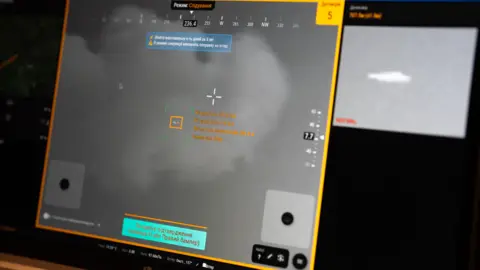
This week, with air raid warnings wailing in the distance, Kyiv held a funeral for two sisters. 12-year-old Liubava and her 17-year-old sister Vira were among 24 civilians killed by a Russian missile that reduced their residential block to rubble earlier this month. They had already lost their father who had been fighting on the front line. Their grieving mother is now the family's sole survivor.This is the human cost of the largest sustained Russian aerial assault so far – with 1,500 drones and 56 missiles fired at Ukraine within 48 hours. But the loss of life could have been even higher. Ukraine's air defenses successfully intercepted a significant number of these threats. According to President Volodymyr Zelensky, 94% of long-range drones and 73% of missiles were successfully neutralized, showcasing an improvement in defense capabilities compared to past performances.Lt Col Yuriy Myronenko, from Ukraine's Ministry of Defence, stated that while they have become the best in the world at intercepting aerial threats, it remains a complex task, particularly with ballistic missiles.Ukraine has built an increasingly sophisticated layered air defense system since Russia's full-scale invasion began over four years ago. Initially reliant on outdated Soviet-era weapons, Western support introduced advanced systems like Patriot missiles. Additionally, Ukraine has integrated its innovative solutions, including mobile fire teams and affordable interceptors.The development of the Sky Map software has been pivotal, utilizing radars, sensors, and AI to track threats effectively. From retrofitted mobile phone systems to high-tech sensors, the approach has evolved significantly.Among the most effective measures are low-cost interceptor drones, with Ukraine now producing upwards of 1,000 daily. These interceptor drones are expected to disrupt Russian bombing approaches, having already claimed significant numbers of enemy drones.In a recent demonstration, P1-SUN interceptors have shown speeds exceeding 300km/h, highlighting Ukraine's adaptation to battle needs. While these interceptors provide a practical solution against expensive Russian drones, challenges remain, particularly in terms of addressing sophisticated threats like FPV drones that continue to inflict casualties.Both sides are now in a race to innovate quicker than the other, with improvements on both ends prompting increased casualties and devastation. Despite ongoing advancements, President Zelensky warns that the scale of Russian attacks aims to overwhelm Ukrainian defenses, ensuring further tragic losses in the ongoing conflict.