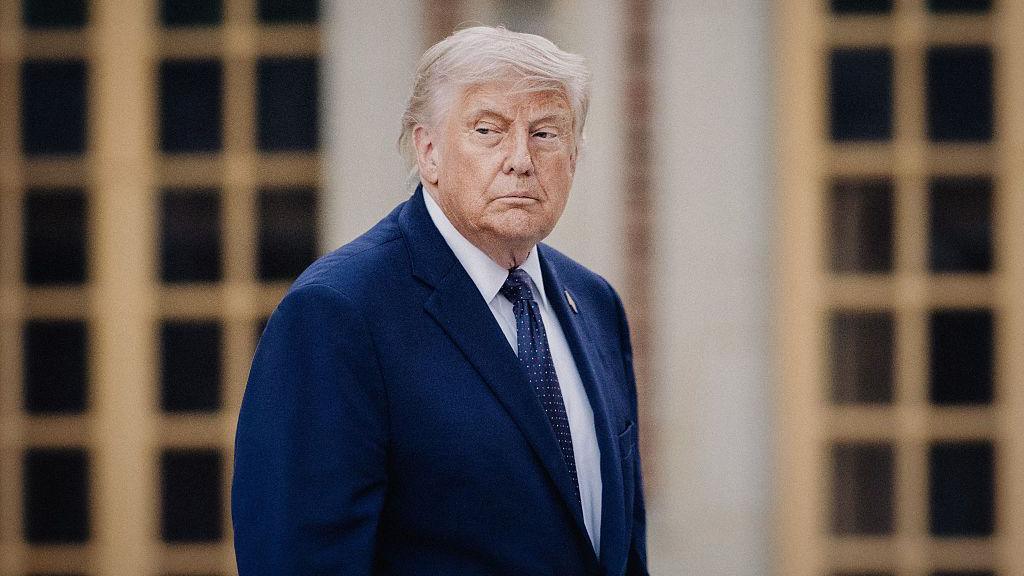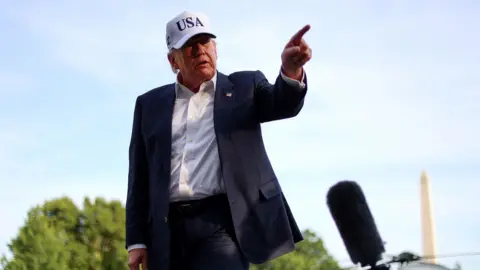
Hours after meeting Chinese President Xi Jinping in Beijing last week, Donald Trump issued a stern warning to Taiwan against pursuing independence.
I'm not looking to have somebody go independent. And, you know, we're supposed to travel 9,500 miles to fight a war. I'm not looking for that. I want them to cool down. I want China to cool down, he told Fox News in an interview that aired on Friday.
Trump's comments - some of the strongest a US president has made so far on the issue - immediately sparked a flurry of responses from Taiwan saying it does not see the need to formally declare independence. Taiwanese independence is the reddest of red lines for Beijing, which claims Taiwan as its own and has accused its president Lai Ching-te of being a separatist.
However, the issue is a lot more nuanced. China's desire for reunification with Taiwan is rooted in historical claims dating back to the end of the Chinese civil war in 1949. After this conflict, the Kuomintang forces retreated to Taiwan and set up their own government, which Beijing has since claimed as its own territory. China's current leadership has intensified its threats against Taiwan under Xi Jinping, making it a key goal to achieve what they describe as peaceful reunification.
Notably, during Trump's meeting with Xi, the Chinese leader emphasized that Taiwan is the most significant issue in US-China relations, suggesting that mismanagement of this topic could lead to conflict.
Most people in Taiwan currently wish to maintain the status quo, avoiding both a formal declaration of independence and unification with China, despite the DPP government's stance asserting Taiwan's independence indirectly. Lai Ching-te, the current president, maintains that since Taiwan considers itself already an independent country, there is no need for a formal declaration.
Trump's statements, while surprising to some observers, have raised concerns about potential shifts in US policy regarding Taiwan. The US has historically supported Taiwan's defense without explicitly advocating for its independence. Political analysts caution that Trump's comments may embolden China while also observing that the US policy framework remains centered on an ambiguous stance regarding Taiwan's independence amidst regional stability efforts.