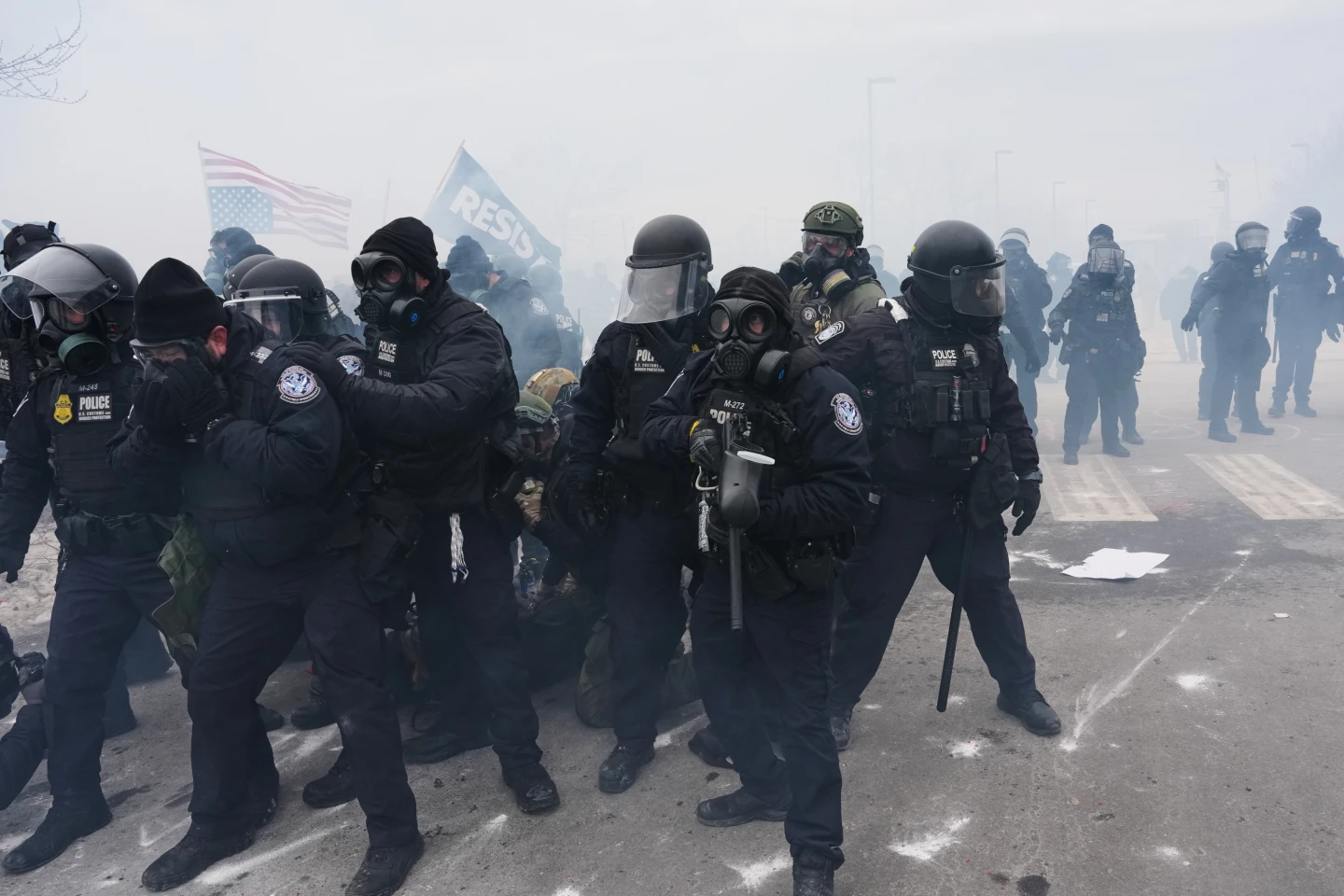
The Trump administration is increasingly using messaging that draws from phrases, images, and symbolism commonly associated with right-wing groups as it intensifies its immigration crackdown in Minneapolis and across the nation.
On January 9, just days following the shooting of Renee Good by an ICE agent, the Department of Homeland Security (DHS) posted on social media a provocative image accompanied by the text, “We’ll have our home again,” echoing themes from a song embraced by far-right groups. The day after, the Department of Labor shared another post that some critics likened to Nazi slogans, stating, “One Homeland. One People. One Heritage.”
As President Trump ramped up his tactics regarding Greenland, the White House shared yet another image symbolizing a division in national allegiance, further emphasizing a narrative of division tied to immigration and national identity. These posts have renewed suspicions regarding the administration’s subtle promotion of imagery and language that may align with white supremacist ideologies.
While the administration defends these messages as expressions of historical nationalism, critics like law professor César Cuauhtémoc García Hernández argue that such references are not necessary for advocating immigration regulation. They suggest a strategic choice to align with alt-right symbolism to invigorate a specific voter base that embraces nationalist rhetoric despite the potential backlash from broader audiences.
The administration, in turn, has dismissed accusations connecting their messaging to supremacist ideologies, claiming that critiques come from a left-wing perspective that mischaracterizes their intentions and means. Officials have pointed to the high number of illegal immigrants as justification for their messaging choices.
Despite Trump’s administration successfully garnering support from Latino voters, his long-standing relationship with white supremacist groups remains, as many view his stances as validating their narratives. The coalitional strategies and divisive ideologies at play ultimately raise questions on the long-term implications of such a messaging strategy, particularly as it becomes more pronounced amidst significant political turbulence.