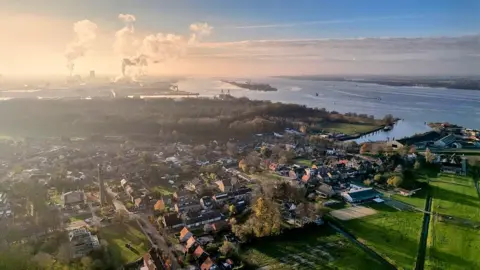
In the south of the Netherlands, beside a wide estuary, a village of around 1,100 people is likely to disappear from the map.
Moerdijk, a small fishing community 34km (21 miles) south of Rotterdam, is on the fault line of the nation's green energy transition.
The Dutch government says the country needs vast new sites to build high-voltage substations where cables carrying electricity from growing offshore wind farms can be connected to the national grid.
Yet the Netherlands is short of land. Officials argue that Moerdijk, which is on the southern shore of the Hollands Diep estuary, and well located next to ports, motorways, and existing overhead power lines, is a prime location for such a facility.
So the residents face the real threat of seeing their homes demolished at some point in the next decade, and the village potentially vanishing.
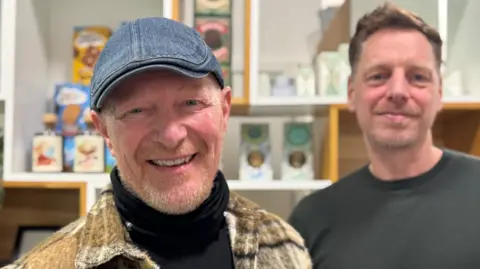
We are being brought to the slaughter house, says fishmonger Jaco Koman. From his office overlooking the glistening waterway, the third generation fish merchant gestures to the horizon.
His family has trawled for their livelihoods here since 1918, and Koman's company still keeps live eels for smoking - a traditional Dutch delicacy - and supplying high-end restaurants across the country.
He guides me inside a warehouse full of vast, bubbling water tanks and heaves out a haul of the squirming, long, thin black fish. Be careful they can jump, he says, laughing at my squeamishness.
The industry, Koman says, much like his latest catch, is thriving. Yet the deep water and open land that sustain his livelihood are part of what make Moerdijk so attractive to planners.
You go to bed with it and you wake up with it, he says of the threat that his village could be cleared to make way for new energy infrastructure. Are they really saying that you have to go with your village?
When residents first heard the news, Koman remembers everybody was shocked. His voice cracks, It was really, really terrible. The prospect now is that not just his business, but his home on the other side of the dyke that protects the village from the water, could be lost.
Koman does not deny that the Netherlands needs more clean power, but questions why the burden should fall here.
Offshore wind farms, he and many other villagers argue, could be connected further out at sea, with converter stations built away from existing communities rather than smack bang on top of them.
The unease and sense of limbo is palpable on Moerdijk's streets. For sale signs punctuate gravel driveways. Yet few buyers are willing to invest in a place that may be completely uprooted. Flags hang limply at half mast in what residents describe as an act of mourning for the death of a village which technically still exists.
Inside the local grocery shop, owner Andrea explains why the stakes feel so personal. Her husband built their home with his own hands, and all three of their children were born there.
I'm scared I'll lose my house, she says. There's so much life here. But in 10 year's time it may be nothing.
Jacques, a 71-year-old retired engineer, stands outside his eco-friendly home on the edge of Moerdijk, built in the mid 1990s on what was once farmland. Today, the view takes in one of Europe's largest logistics hubs and key transport routes between Rotterdam and Belgium, the rumble of passing trucks drowns out the birdsong. This village will be demolished. That I know for sure, he says.
The Dutch government has already postponed a decision on Moerdijk's future, but it is now expected later this year. The mayor of Moerdijk municipality, Aart Jan Moerkerke, says the pressure is immense.
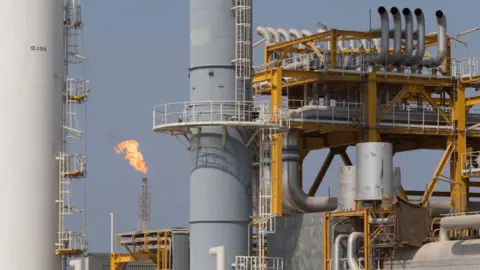
In addition to building the vast power facility on the site, there are plans for several hydrogen production factories. And huge tubes for the transport of ammonia and hydrogen from the port of Rotterdam to the south eastern part of the Netherlands are also due to run through Moerdijk.
Telling residents in Moerdijk that their homes, streets and cemeteries may not survive the decade was, says Moerkerke, the hardest decision of my career and one he will never forget.
What's being decided here is not just the fate of a few streets on the edge of an estuary. It's a test of what a government believes can – or must – be sacrificed for energy security, sustainability and industry.