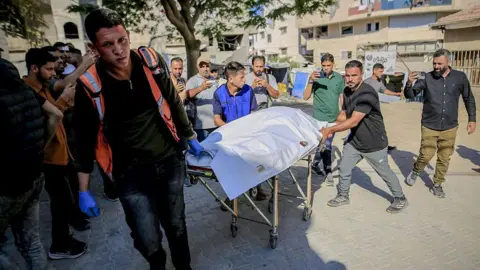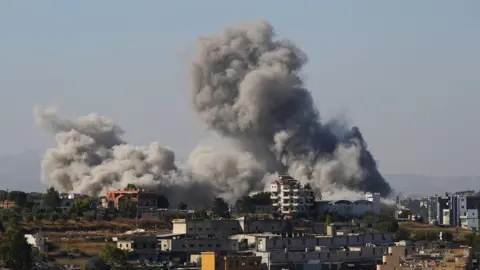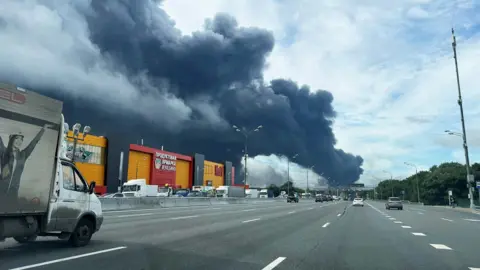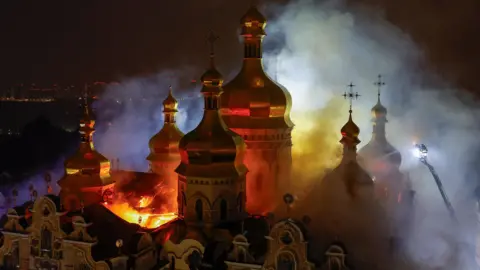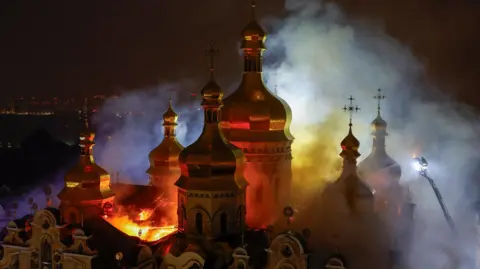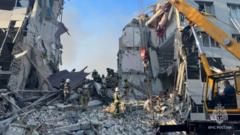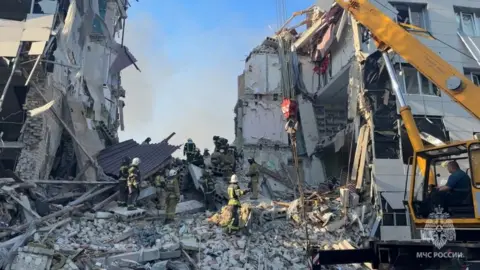
At least five people have been killed in Russian strikes across Ukraine after a massive overnight aerial bombardment targeted several regions across the country. A 61-year-old woman was killed when a drone hit an electric train in Kharkiv early on Tuesday, with additional fatalities reported in Zaporizhzhia, Kherson, and Poltava.
Officials described the attacks as among the worst seen in ten days, coming just hours after President Volodymyr Zelensky's warning of a likely 'massive strike' during his nightly address. Strikes also targeted energy infrastructure, disconnecting Moldova from its primary power link with Europe, affecting regional energy security.
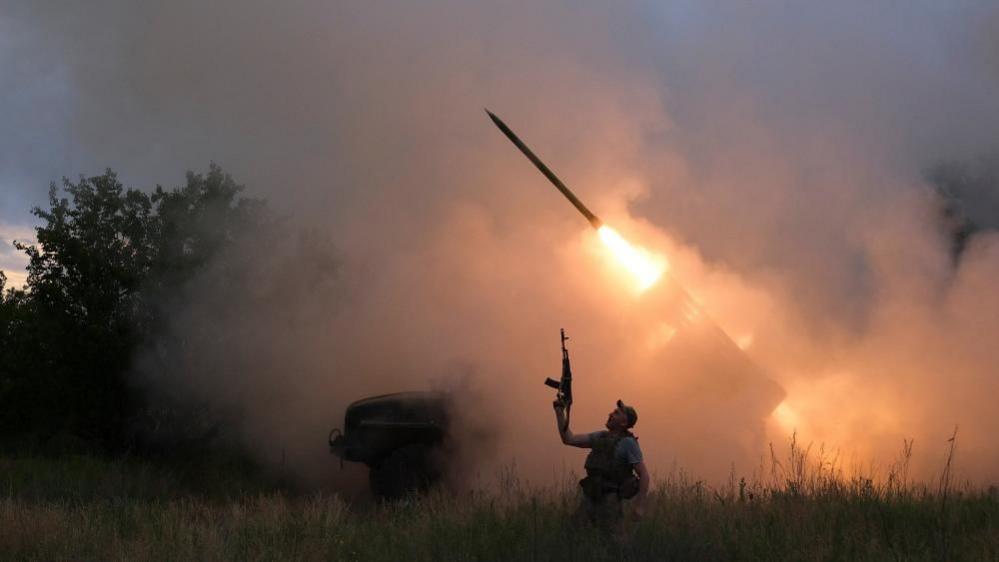
Sirens echoed through Ukraine on Monday night as Russia unleashed a torrent of missiles and drones, totaling seven ballistic missiles, 23 cruise missiles, and 392 drones according to the Ukrainian Air Force. Air defense units were able to intercept 25 missiles and 365 drones.
In a statement on social media, President Zelensky noted the urgent need for enhanced protection to save lives and called for continued support for Ukraine. The recent attacks represent a troubling trend of increased strikes occurring roughly every week or ten days, raising alarms over the safety of civilians across the region.
The assault focused primarily on urban areas outside of Kyiv, with damage noted in eleven regions, particularly in Zaporizhzhia where six drones and ballistic missiles struck residential areas, leading to casualties and significant destruction. Local residents described terrifying experiences during the bombings as they fled from their homes amidst chaos and flames.
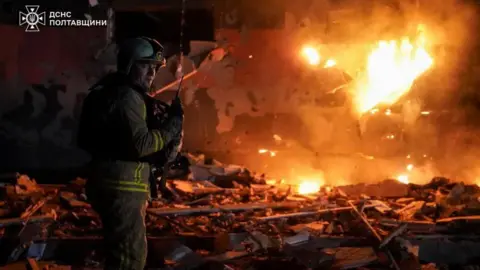
In Poltava, a striking incident involved missiles hitting residential buildings and a hotel, leading to deaths and injuries among civilians. Attacks continue to pose a severe threat, warning that energy infrastructure is increasingly targeted, affecting not only Ukraine but neighboring Moldova as well.
As the pace of the Russian advance has slowed, officials suggest that efforts must be intensified to secure air defense capabilities, especially as geopolitical circumstances shift with conflicts in the Middle East potentially distracting international focus from Ukraine.
Officials described the attacks as among the worst seen in ten days, coming just hours after President Volodymyr Zelensky's warning of a likely 'massive strike' during his nightly address. Strikes also targeted energy infrastructure, disconnecting Moldova from its primary power link with Europe, affecting regional energy security.
Sirens echoed through Ukraine on Monday night as Russia unleashed a torrent of missiles and drones, totaling seven ballistic missiles, 23 cruise missiles, and 392 drones according to the Ukrainian Air Force. Air defense units were able to intercept 25 missiles and 365 drones.
In a statement on social media, President Zelensky noted the urgent need for enhanced protection to save lives and called for continued support for Ukraine. The recent attacks represent a troubling trend of increased strikes occurring roughly every week or ten days, raising alarms over the safety of civilians across the region.
The assault focused primarily on urban areas outside of Kyiv, with damage noted in eleven regions, particularly in Zaporizhzhia where six drones and ballistic missiles struck residential areas, leading to casualties and significant destruction. Local residents described terrifying experiences during the bombings as they fled from their homes amidst chaos and flames.
In Poltava, a striking incident involved missiles hitting residential buildings and a hotel, leading to deaths and injuries among civilians. Attacks continue to pose a severe threat, warning that energy infrastructure is increasingly targeted, affecting not only Ukraine but neighboring Moldova as well.
As the pace of the Russian advance has slowed, officials suggest that efforts must be intensified to secure air defense capabilities, especially as geopolitical circumstances shift with conflicts in the Middle East potentially distracting international focus from Ukraine.