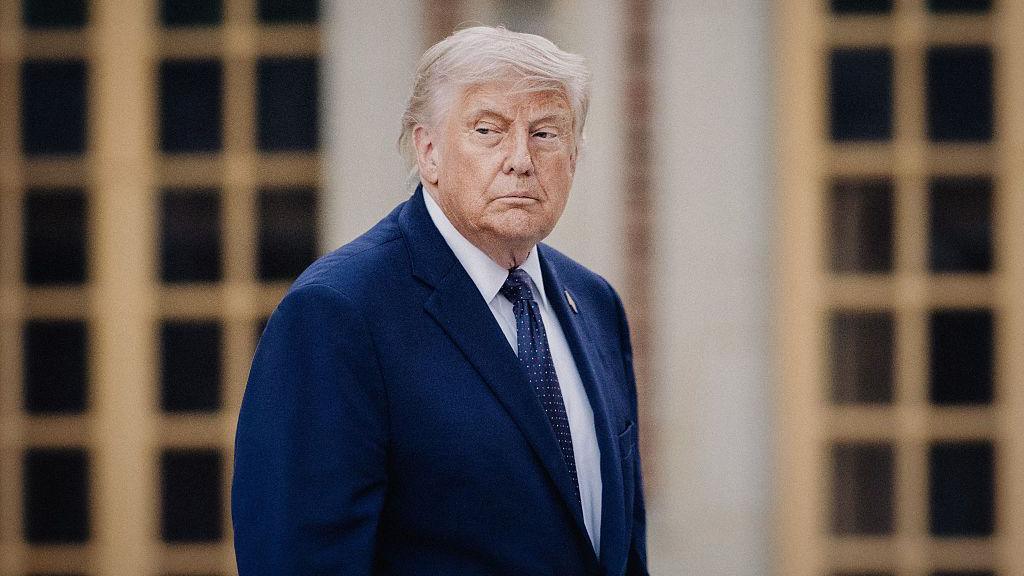
Construction of the underground and above-ground portions of US President Donald Trump's White House ballroom will be allowed to continue, an appeals court has ruled.
The US Court of Appeals for the District of Columbia granted an administrative stay after the Trump administration appealed against US District Judge Richard Leon's decision to halt above-ground construction on Thursday.
Construction is now expected to continue until the next hearing, which is due to take place on 5 June.
This week's rulings came after the appeals court ordered the judge to reconsider the national security implications of halting the work, after he temporarily blocked all construction of the ballroom in March.
The ruling marks a victory for the president in his effort to redesign the storied American structure.
Leon stated that he believed the project required congressional approval, adding that the administration reclassifying the ballroom plans as vital for national security appeared to be an attempted work around.
National security is not a blank cheque to proceed with otherwise unlawful activity, he wrote.
Following the ruling, Trump took to Truth Social to accuse the judge of attempting to prevent future Presidents and World Leaders from having a safe and secure large scale Meeting Place.
He elaborated that the construction was linked to national security efforts, stating it included bomb shelters and medical facilities.
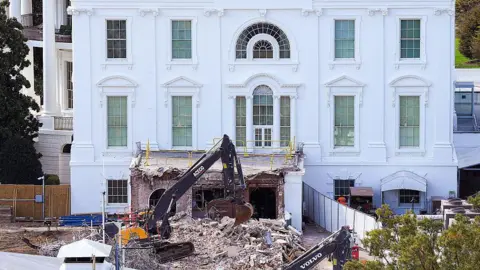
The Justice Department filed an appeal against Leon's ruling on Thursday, arguing it would imperil the president and national security and indefinitely leave a large hole beside the Executive Residence.
The judge had previously temporarily halted the construction project in late March, ruling that proper procedures were not followed before it had begun, following a lawsuit filed by the National Trust for Historic Preservation.
The East Wing of the White House, constructed in 1902, was demolished in October to make way for the multi-million-dollar ballroom, which will have a capacity for 1,350 guests and is expected to cost $400 million, fully funded by private donors.