The law is a product of its time, drafted in response to the communal violence sparked by a movement to construct a temple in Ayodhya, where the Babri Masjid stood. Introducing the law in Parliament, then-home minister S.B. Chavan expressed concern over rising intolerance and the potential for renewed religious disputes. Since its enactment, calls to review the law have emerged, notably from Hindu groups challenging the historical legitimacy of various mosques.
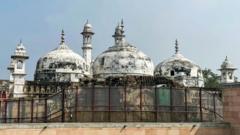
Cases such as the Gyanvapi mosque in Varanasi and the Shahi Eidgah in Mathura illustrate ongoing disputes, further magnified by recent court decisions allowing surveys of historic mosques. Critics fear that a Supreme Court ruling against the 1991 law would open the door for widespread challenges to religious sites, igniting further conflict. In the wake of a recent verdict, the Supreme Court has temporarily halted new cases regarding religious site ownership, with its next hearing slated for February.
The implications of the Court's decisions could redefine inter-religious dynamics in India, as historical narratives remain hotly contested and community tensions linger beneath the surface.
Cases such as the Gyanvapi mosque in Varanasi and the Shahi Eidgah in Mathura illustrate ongoing disputes, further magnified by recent court decisions allowing surveys of historic mosques. Critics fear that a Supreme Court ruling against the 1991 law would open the door for widespread challenges to religious sites, igniting further conflict. In the wake of a recent verdict, the Supreme Court has temporarily halted new cases regarding religious site ownership, with its next hearing slated for February.
The implications of the Court's decisions could redefine inter-religious dynamics in India, as historical narratives remain hotly contested and community tensions linger beneath the surface.