In brief
President Trump's effort to reshape congressional districts to benefit Republicans—by urging states to redrawn maps before the next midterm—was thwarted. In South Carolina, the state Senate rejected the plan to cancel voting in ongoing primaries and keep the current map. In Alabama, a federal court issued a preliminary injunction, blocking a Republican‑drawn map that would have given the GOP an extra seat. The moves underscore tensions over gerrymandering, voting rights, and the role of the White House in redistricting.
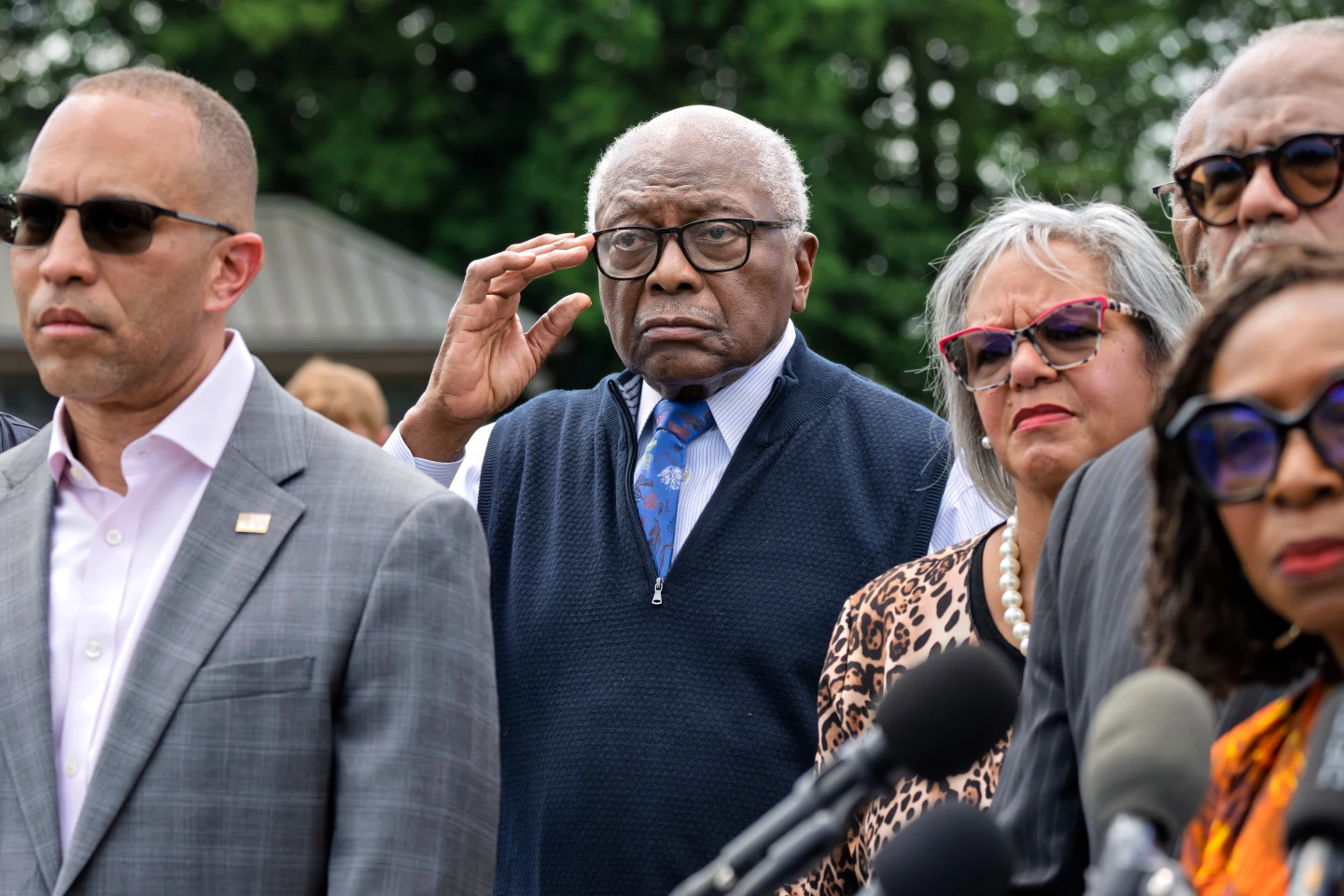
COLUMBIA, S.C. (AP) — President Donald Trump’s bid to reshape congressional districts before the November elections met a double setback on Tuesday. South Carolina senators rejected a GOP plan that would have cancelled the current congressional primary and instead scheduled a new primary under a revised map designed to help Republicans oust a long‑time Democratic incumbent. Meanwhile, a three‑judge federal panel in Alabama issued a preliminary injunction blocking a Republican‑drawn congressional map that could have added another seat to the GOP tally.As early in‑person voting began Tuesday in South Carolina’s primaries, state senators walked out of a session that had been set to approve a new mapping. One senator, Republican state Sen. Richard Cash, told reporters, “South Carolina citizens are going to the polls today. And neither my conscience nor common sense is going to let me stop an election that is already underway.”The political drama in South Carolina is part of a Republican strategy, bolstered by Trump, to redistrict in the GOP’s favor ahead of the 2026 midterms. The party’s push follows a U.S. Supreme Court decision that weakened minority protections under the Voting Rights Act, giving lawmakers more leeway to engage in partisan gerrymandering.In Alabama, the federal panel’s injunction left in place the court‑imposed map that preserves two majority‑Black districts, rather than the one‑district version proposed by the state. The court found that the GOP plan “intentionally discriminated based on race” and ordered that the existing map remain in use.Alabama Attorney General Steve Marshall, a Republican, vowed to appeal quickly to the Supreme Court and predicted eventual victory.Beyond South Carolina and Alabama, the redistricting race is far from over. GOP‑controlled states have enacted new congressional maps in Missouri, North Carolina, Ohio, Florida, and Tennessee, hoping to flip as many as fifteen seats. Democrats, meanwhile, argue that they could win five additional seats from California’s voter‑approved districts and a court‑imposed map in Utah. In Virginia the state Supreme Court invalidated a voter‑approved plan that could have helped Democrats gain seats.The Congressional Black Caucus has called on major corporations to oppose Republican redistricting efforts that threaten majority‑Black districts, and has urged Black athletes to boycott public universities in states pursuing such maps.In South Carolina, support for the GOP’s plan was met with grassroots opposition. More than 32,000 votes had been cast by 1 p.m. on the first day of early voting. Rep. Jim Clyburn—whose district was targeted for reshaping—cast an early ballot in Orangeburg and vowed to run for reelection regardless of the district’s shape.Clyburn, who has historically been a key ally for President Trump in the House, pushed back on the plan’s logic. “I’m OK if it’s Trump plus 20,” he said, “I would be running where I live.” He added criticism that the White House was pressuring lawmakers to ignore established redistricting processes.The push for new maps began with President Trump urging Texas to redraw its districts last summer. Republicans have fast‑tracked proposals in other states, hoping to exploit the Supreme Court’s weakening of minority protections. However, federal courts have begun to counter these moves, underscoring the contested nature of redistricting in the United States.The story is ongoing. Federal courts and state legislatures will keep battling over the shape of congressional districts, with the stakes reaching the level of the national House majority and potentially the presidency itself.—Chandler, Montgomery, Alabama; Lieb, Jefferson City, Missouri.