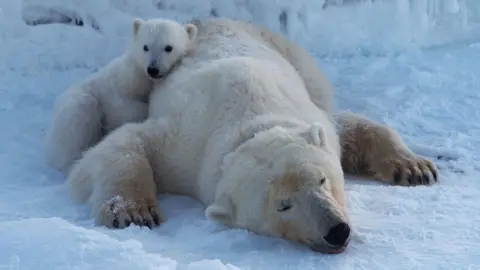
Scientists expected the opposite, but polar bears in the Norwegian Arctic archipelago of Svalbard have become fatter and healthier since the early 1990s, all while sea ice has steadily declined due to climate change.
Polar bears rely on sea ice as a platform from which to hunt the seals that they depend on for fat-rich meals crucial for energy, insulation, and the production of rich milk for cubs.
Researchers weighed and measured 770 adult polar bears in Svalbard between 1992 and 2019, finding that these bears had become significantly healthier.
According to researchers, Svalbard bears have adapted to recent ice loss by consuming more land-based prey, including reindeer and walruses. This shift has unexpectedly contributed to their enhanced body condition amid worsening climate impacts.
Dr. Jon Aars from the Norwegian Polar Institute, who led the research, commented on the surprising results stating, the fatter a bear is the better it is, countering expectations of declining body conditions linked to profound ice loss.
The study's findings hinge on the recent population recovery of walruses, which have been officially protected since the 1950s, providing a new food source for polar bears. Additionally, enhanced hunting efficiency might be a factor, as seals may concentrate in smaller areas of remaining sea ice, making them easier targets.
Despite the temporary benefits observed, researchers express concerns for the long-term future of Svalbard's polar bears. Continued declines in sea ice could lead to increased energy expenditure as bears travel further for hunting, ultimately depleting their fat reserves.
While this update offers a brief moment of optimism for these Arctic predators, the overarching narrative of polar bears remains tied to the health of their marine environment and the ongoing challenges posed by climate change.