In brief
Josh Courville, a lifelong crawfish harvester, is battling the invasive giant apple snails that clog traps and threaten rice-crawfish farming. As delphacids further endanger productive yields, researchers strive to understand these pests' rapid spread. Climate change exacerbates the situation, complicating agricultural practices and increasing costs for farmers. Adaptation strategies are crucial as these invasive species pose significant threats to Louisiana's agricultural sustainability.
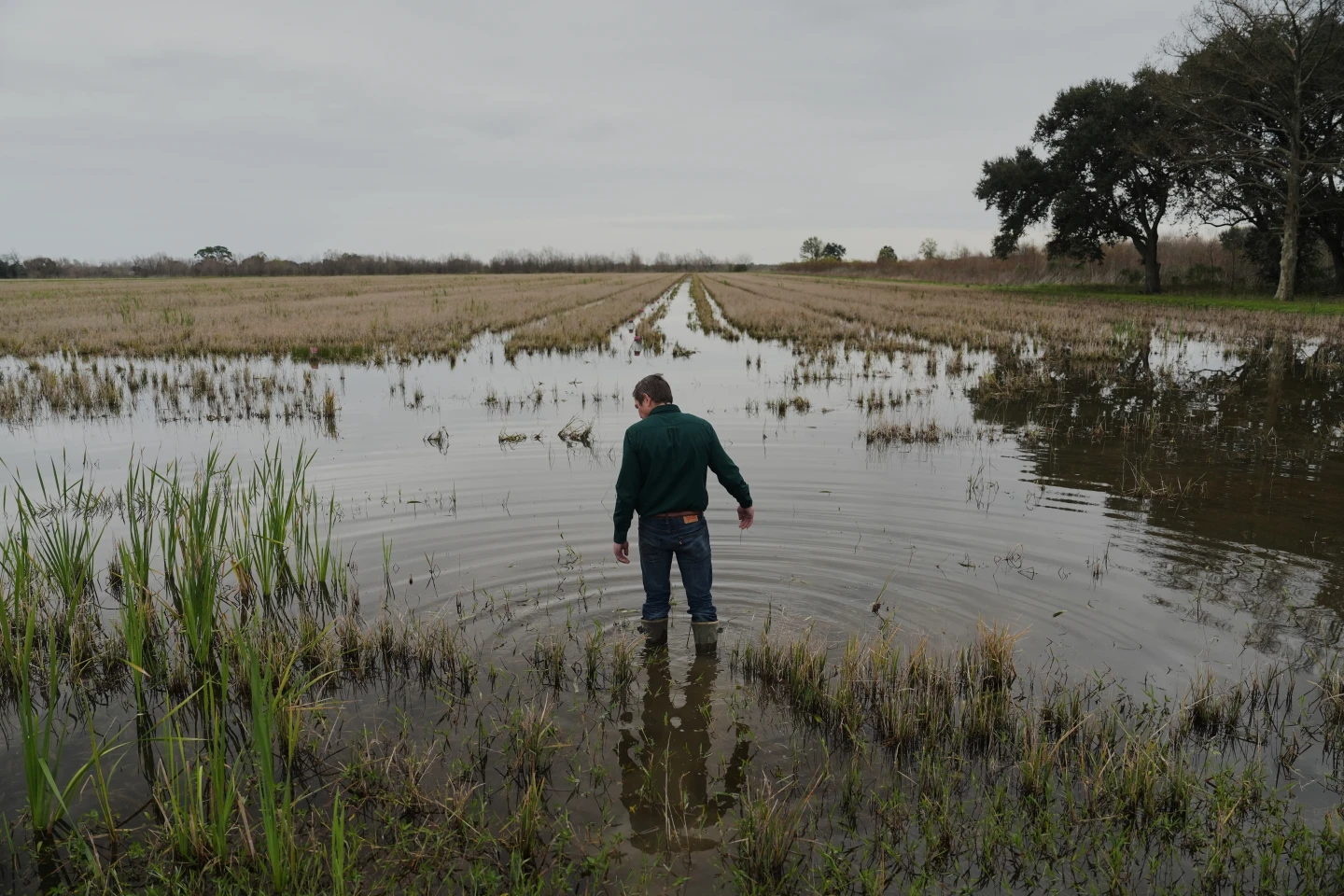
KAPLAN, La. (RTW News) — Crawfish farmer Josh Courville has harvested crawfish all his life, but nowadays, he experiences a troubling trend in his southern Louisiana fields.
Giant apple snails. For every crawfish Courville pulls from a trap, three or four of these snails land on the metal table of his boat. Fully grown, they can be as large as a baseball and they can withstand various weather conditions while laying thousands of bubblegum-pink eggs monthly.
“It’s very disheartening,” said Courville, expressing the frustration of dealing with such uncontrollable infestations.
But these apple snails are just one piece of a larger puzzle as invasive species now threaten Louisiana’s agriculture. Particularly concerning are delphacids, tiny insects that devastate rice crops.
“Both the snails and the delphacids present significant challenges that we have to address,” explained Steve Linscombe, director of The Rice Foundation.
In Louisiana, where rice and crawfish are often cultivated together, the interaction of these pests creates a compound threat. Research is underway to understand the drivers behind their spread, including factors like farming practices and environmental changes.
Experts believe that climate change is likely facilitating these invasions, allowing pests to spread into new territories as warmer temperatures prevail. For example, after floods in 2016, the population of apple snails rapidly expanded, resulting in significant losses of crops.
“It’s a complex situation that agriculture must navigate,” said Hannah Burrack, a professor at Michigan State University. “We may have more pests that are better adapted to survive if the climate continues to warm.”
Courville manages fields for Christian Richard, a sixth-generation rice farmer. Their land is now regularly affected by these invasive pests, complicating their planting processes and raising operational costs.
"We need dry fields at crucial growth periods for our crops. In the past, we would rotate between rice and crawfish, but that has become much more complicated," Richard shared.
While there are various strategies available to combat these invasive species, including the use of copper sulfate to manage snail populations, the costs can be prohibitive. Such measures increase labor and input costs significantly.
With persistent infestations from both snails and delphacids, farmers worry not only about their immediate productivity but also about the long-term implications on rice prices for consumers.
As researchers continue their studies and recommend best practices, the hope is to find effective management solutions without relying heavily on chemical treatments that might harm existing crops and ecosystems. Linscombe emphasized that farmers’ traditional planting methods are evolving in response to this urgent challenge.