Samsung Workers' Strike Postponed Amid Pay Negotiations: What Lies Ahead?
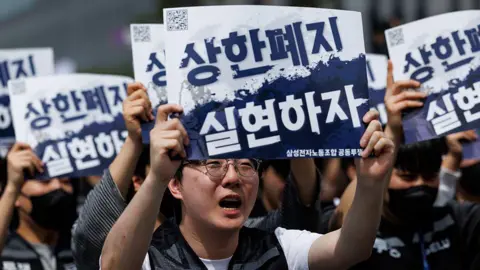
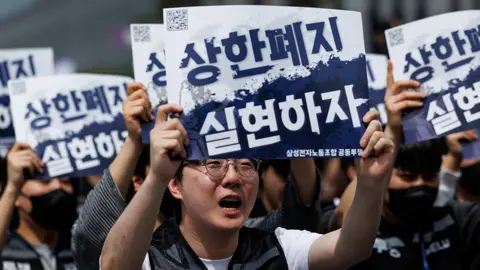
The largest union at Samsung Electronics has suspended a planned strike after reaching a last-minute tentative pay agreement with the South Korean technology giant. It has temporarily eased fears of disruption at the world's largest memory chipmaker during a boom in the building of artificial intelligence (AI) data centres.
The union, representing nearly 48,000 workers, announced that industrial action set for Thursday would be paused while members vote on the agreement from May 22 to 27.
The disagreement primarily revolved around how to allocate profits from the increasing demand for AI memory chips. Specifically, the allocation of bonuses between employees in memory chip divisions and those in other sectors was contentious. Samsung proposed to pay bonuses of 607% of annual salary to around 27,000 memory chip workers, while offering just 50% to 100% to employees in other divisions.
This pay disparity raised concerns about equitable treatment and jeopardized the chip production workflow at Samsung, a crucial supplier for sectors reliant on advanced chips. As the world's largest memory chipmaker, any disruptions could have far-reaching implications for global supply chains, especially given recent fierce competition from rivals like SK Hynix.
Samsung's operating profit surged about 750% in Q1, fueled by the AI-driven market boom, allowing it to maintain significant market presence. However, the dispute remains a sensitive topic as all eyes now turn toward how this agreement will influence future labor relations and the company's growth objectives amidst rising competition.