In brief
In the heart of Malawi, Martha Ongwane reflects on her journey with her autistic daughter, Rachael. Once desperate and overwhelmed, Martha's perspective changed dramatically after accessing critical support. With the aid of local organizations, she shifted from despair to joy, demonstrating the power of community and understanding in the face of societal stigma. Despite the advancements, Martha's story underscores the ongoing challenges for mothers of autistic children in a country with limited resources.
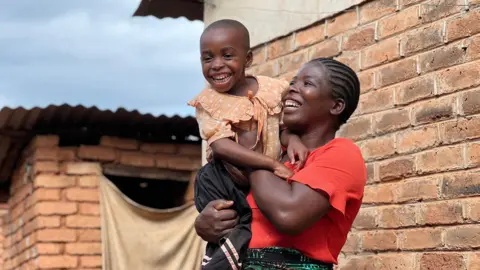
Martha Ongwane looks adoringly at her bouncy, giggling four-year-old, unable to believe that just two years ago she had wanted to kill her. Non-verbal, biting and unable to sit still, her daughter Rachael, who had been diagnosed with autism, had slowly overwhelmed Martha leaving her desperate and depressed. She was shunned by her neighbours in the east African country of Malawi, who blamed her for what Rachael was doing. Martha was told to lock her little girl inside. There was no sympathy, and little understanding of autism and how it should be treated.Martha describes how she had poured poison into a cup, intending Rachael to drink it. I told myself it would be better if she died because that would mean she would rest and that would be the end of our problems. But my heart didn't let me. I changed my mind and cried so much, she says softly, looking down at her hands. Two years on, it is hard to imagine that scene as mother and daughter share a loving domestic moment. Rachael clambers onto her mother's lap as they sit on the floor of their home in Mzuzu, northern Malawi. The girl laughs, hugging Martha's face, as the 33-year-old cuts vegetables for lunch.The transformation has been incredible and is largely due to the family getting access to expert care. Rachael was referred to Saint John of God, an organization that helps disabled children. Funded mainly by the Catholic Church, it provides community-based mental health services, becoming a lifeline for the family. Martha and her husband also received counseling. Once isolated and stigmatized, the couple found a support network and educators who could deal with Rachael's issues.Unfortunately, most here are not so lucky. The World Health Organization reports Rachael is one of over 60 million people worldwide on the autistic spectrum. Autism, or autism spectrum disorder, is a neurodevelopmental disability that affects communication and social interaction. In Malawi, there are only two developmental pediatricians for a population of over 22 million people, leading many families to rely on traditional healers, which can perpetuate misconceptions.Despite these challenges, organizations like Saint John of God are working to change perceptions and provide necessary support. Martha has shared her story in hopes of helping other mothers and wishes she had sought help sooner. When I look at her, I feel so guilty. Every day I think about the fact that my daughter could have been dead. I adore her now.\