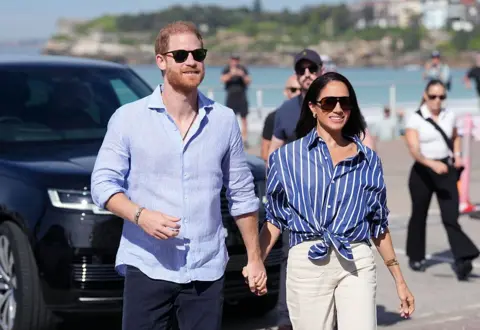
The Duke and Duchess of Sussex have finished their brisk four-day visit to the east coast of Australia. With an itinerary of Indigenous culture, Australian sport, multiple good causes and a trip to the national war memorial, it had all the hallmarks of a traditional royal tour.
But Prince Harry and Meghan Markle, no longer working royals, were here in a private capacity. When they last visited in 2018 - then still active members of the Royal Family - tens of thousands of people greeted them on a nine-day tour across Australia.
This time was different. Most Australians the BBC spoke to were either unaware or uninterested in the couple's visit. There has been some backlash too, after it emerged Australian taxpayers may be saddled with some of the security costs for their public events.
If they think it's gone well, it's because nothing has gone wrong, says Giselle Bastin, an associate professor at Flinders University with a research interest in Australia's relationship with the monarchy. They didn't turn up at great big advertised opportunities to see them, at least not in the form of walkabouts, so they've managed to minimise the risk of people having a negative reaction, or hecklers calling out or booing them or anything like that.
That's not to say Harry and Meghan haven't been in their element during such encounters, high-fiving fans and taking selfies with them. We witnessed this up close time and again – including on Friday, when Harry met Michelle Haywood beneath the sails of the Sydney Opera house. Haywood is the daughter of Daphne Dunne, a servicewoman and war widow who met the Prince in 2015 during a previous visit; she was wearing her husband's Victoria Cross.
Dunne died aged 99 in 2019, but Haywood waited patiently this week to present Harry a photo of her mother alongside him, in his army fatigues.
Meghan also showed her warmth, whether listening intently and compassionately to survivors of the Bondi Beach attack, or telling a young boy how much her children loved the Australian book Diary of a Wombat.
And if you call that a connection, then it was right on brand. The words 'connection' or 'connected' were mentioned 30 times across the press releases issued by the Sussexes' media team to journalists after each day of the visit.
Mental health was another theme of the couple's schedule, including meeting young people to discuss the harms of social media. It was here Meghan said she had been the most trolled person in the world for 10 years and shared stories of being attacked and bullied online for a decade.
Harry and Meghan have a life to build - and pay for - away from royal duty. But when it came to the commercial side of their Australia trip, it wasn't always clear what was – and what was not – a paid gig.
Meghan was also unveiled as an investor in OneOff - an AI platform that gives fashion suggestions based on the styles of celebrities and influencers, with a small cut of sales going to the featured stars. The Duchess's profile on the app already features items she has worn during the Australian tour.
While the itinerary for their 2018 mega-tour was rammed with engagements (76 over 16 days in Australia, New Zealand, Fiji and Tonga), this one had plenty of gaps. Most notably was Megan's complete absence of public-facing appearances on Wednesday, reportedly because she was filming an episode of MasterChef Australia.
Ultimately, while critiques of their commercial engagements surfaced amid a cost-of-living crisis, both fans and benefactors acknowledged the positive impacts of their visit on various community initiatives, indicating a complex reception to their time in Australia.