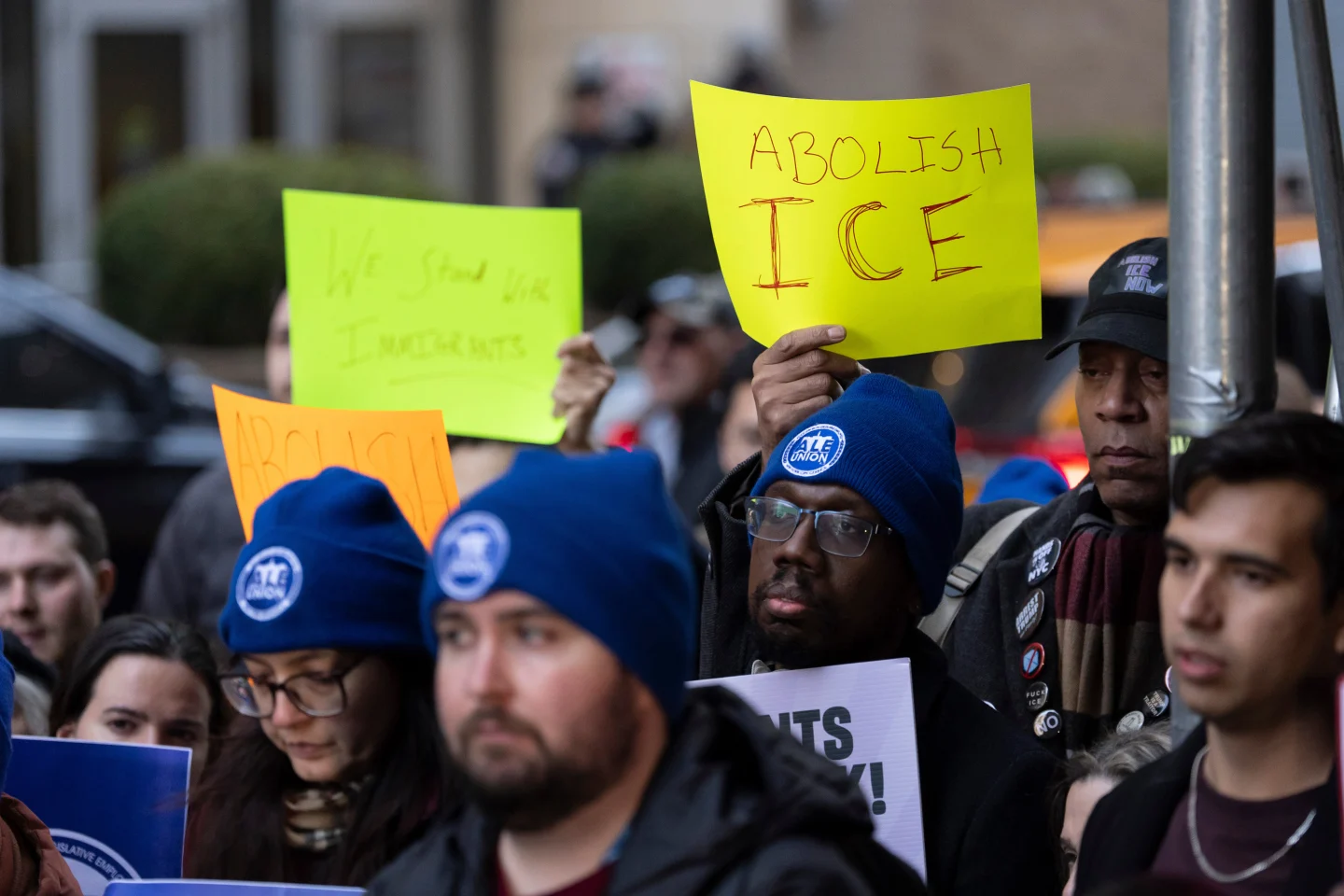
NEW YORK — The arrest of a New York City Council employee, Rafael Andres Rubio Bohorquez, has ignited significant backlash against the Trump administration's immigration policies. Rubio Bohorquez, who works as a data analyst, was detained by U.S. Immigration and Customs Enforcement (ICE) for allegedly overstaying his tourist visa, angering city officials and prompting protests outside the Manhattan detention center where he is being held.
City Council Speaker Julie Menin argued that Rubio Bohorquez is legally authorized to work until October, stating that he had undergone a thorough background check during his hiring process. This arrest is a clear example of egregious government overreach, Menin declared during a news conference, emphasizing that they are exhausting all efforts to secure his release.
Menin, alongside New York Rep. Dan Goldman, mentioned that a petition has been filed by the New York Immigration Coalition and the New York Legal Assistance Group to demand his release. While ICE maintains that he had no legal status in the U.S. and has a previous assault arrest, Menin insisted that he had cleared the application process when hired by the City Council.
New York City Mayor Zohran Mamdani expressed similar sentiments of outrage, calling the arrest an attack on the city’s core values and democracy. The incident occurred during what was reportedly a routine immigration appointment on Long Island, which Menin described as a situation that became chaotic.
Rubio Bohorquez entered the U.S. in 2017 with a B2 tourist visa, required to leave by October 2017. Despite his employment with the City Council for about a year at an annual salary of approximately $129,315, ICE has disputed his work authorization, making claims that echo previous controversies surrounding the accuracy of the E-Verify system used by employers.
This incident has raised questions about immigration enforcement practices and their implications for local communities, with experts noting that issues with the E-Verify system persist, potentially leading to wrongful arrests and job losses for individuals who could still be authorized to work.
City Council Speaker Julie Menin argued that Rubio Bohorquez is legally authorized to work until October, stating that he had undergone a thorough background check during his hiring process. This arrest is a clear example of egregious government overreach, Menin declared during a news conference, emphasizing that they are exhausting all efforts to secure his release.
Menin, alongside New York Rep. Dan Goldman, mentioned that a petition has been filed by the New York Immigration Coalition and the New York Legal Assistance Group to demand his release. While ICE maintains that he had no legal status in the U.S. and has a previous assault arrest, Menin insisted that he had cleared the application process when hired by the City Council.
New York City Mayor Zohran Mamdani expressed similar sentiments of outrage, calling the arrest an attack on the city’s core values and democracy. The incident occurred during what was reportedly a routine immigration appointment on Long Island, which Menin described as a situation that became chaotic.
Rubio Bohorquez entered the U.S. in 2017 with a B2 tourist visa, required to leave by October 2017. Despite his employment with the City Council for about a year at an annual salary of approximately $129,315, ICE has disputed his work authorization, making claims that echo previous controversies surrounding the accuracy of the E-Verify system used by employers.
This incident has raised questions about immigration enforcement practices and their implications for local communities, with experts noting that issues with the E-Verify system persist, potentially leading to wrongful arrests and job losses for individuals who could still be authorized to work.