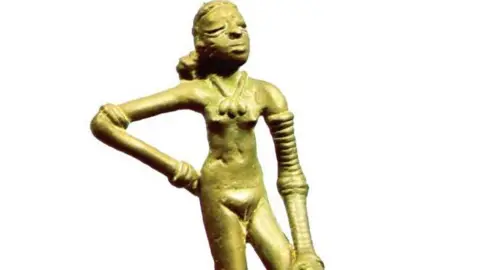
The bronze sculpture famously known as the Dancing Girl, a product of the ancient Indus Valley civilisation, was once rendered on a far‑off canvas in a new Grade 9 textbook. The image was deliberately shaded to cover the figure’s torso, a decision that ignited a storm of disgust among historians, educators and students.
After sustained rallies from academic circles and widespread criticism on social media, the National Council of Educational Research and Training (NCERT) finally withdrew the modified picture. The council confirmed that the original, unaltered photograph would be reinstated for the digital edition of the book, and future printed copies will retain the authentic image.
The controversy follows a sharp editorial in *The Indian Express* that pointed out the absurdity of censoring a statue that embodies confidence and poise. The piece highlighted how historical artefacts should remain unmarred to educate students about the rich heritage of India.
The Dancing Girl sculpture itself, discovered in Mohenjo‑Daro, is currently housed in the National Museum in Delhi and has been used in textbooks for several years. Its depiction of a girl, adorned with ornaments and with her hair in a bun, exemplifies the civilisation’s knowledge of metallurgy and artistic expression.