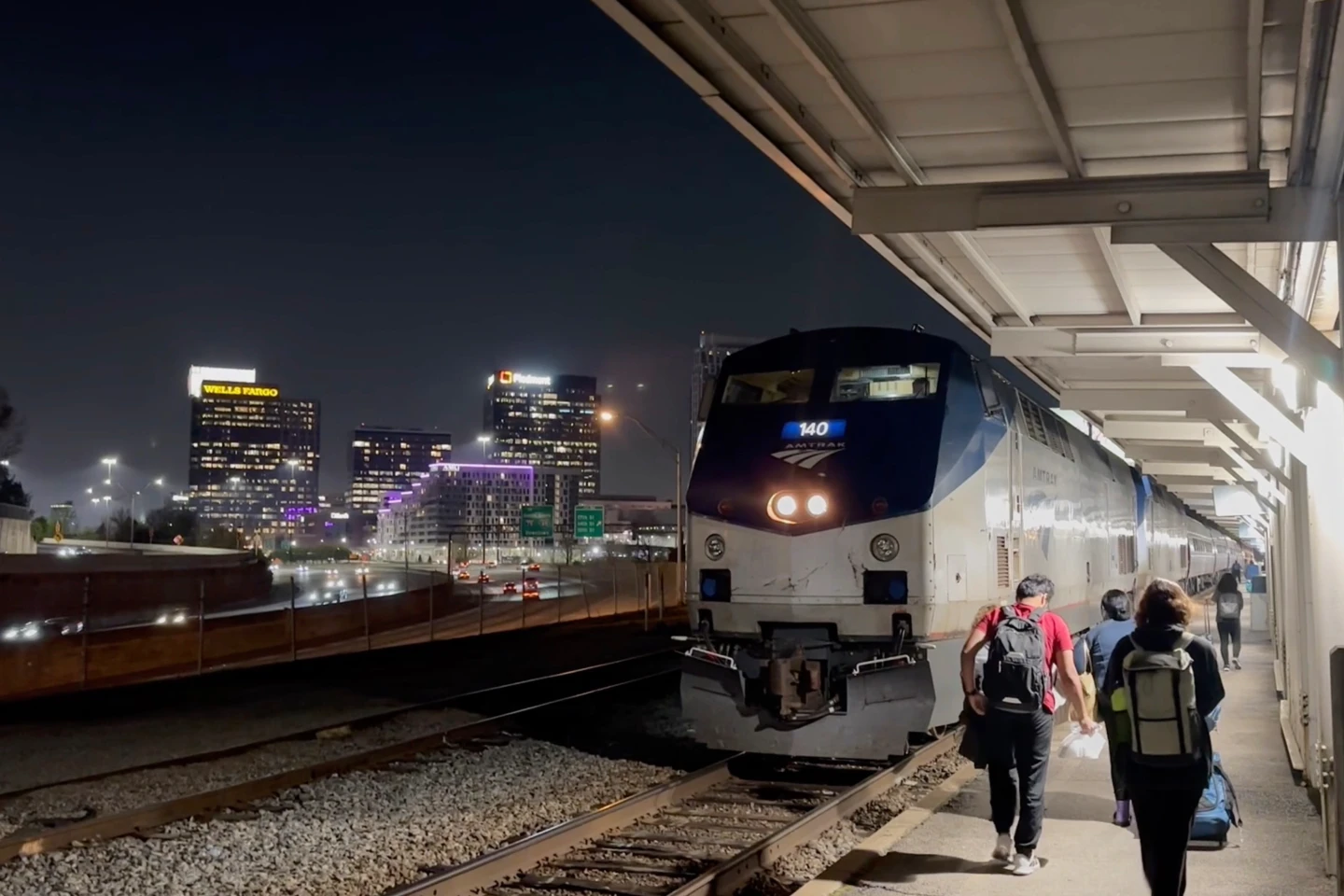
ABOARD THE CRESCENT (RTWNews) — Watching the sunrise over a tranquil landscape interrupted only by the rhythmic sounds of steel wheels on tracks is mesmerizing, yet today's train journeys are interwoven with political significance.
This particular trip was spurred more by necessity than nostalgia, rooted in a budget impasse in Congress and the actions of a contentious administration. The ongoing argument over immigration policies contributed to a chaotic scene at Atlanta’s airport, famously dubbed the busiest in the world, where unpaid federal workers and overwhelmed security staff resulted in long wait times. In pursuit of reaching Washington for a significant NCAA basketball tournament, opting for an overnight train across 650 miles became an appealing choice.
In this politically charged atmosphere, I took time to reflect on the conveniences often taken for granted. The revolution that air travel brought to the 20th century — a luxury that we often regard as a simple task — came under scrutiny amidst the chaos of travel. Such complications remind us of the historical significance of train travel, a major innovation of the 19th century that shaped the nation.
The 14½-hour ride on Amtrak's Crescent invited contemplation on how factors such as politics, economics, and social dynamics affect our mobility. The journey showcased the vast tapestry of the Eastern United States, allowing opportunity to connect with fellow passengers from diverse backgrounds, some of whom represent a reflection of our country's evolving identity.
Convenience and Connections
Late nights at Amtrak stations might lack glamour — fussy children, tired parents, and weary travelers abound. In contrast, airports often carry an air of elegance, particularly with amenities that cater to frequent fliers, especially lawmakers. However, as recent events unfolded, the notions of speed and convenience took a back seat to the ease of ground travel.
Particularly appealing was the absence of hefty security measures typical of airports: no endless lines and no need for previous authorization checks. Passengers successfully boarded the train with tranquil ease, without predetermined seating issues leading to congested aisles. The spaciousness of the seats provided comfort, akin to first-class airline accommodations, despite the absence of onboard services.
A Historical Perspective
As someone who spent their childhood in rural Alabama pondering the fates of train cars, this journey allowed a deeper understanding of America's rail systems that were once segregated along racial lines — a remnant of a bygone era. Many travelers today represent a blend of cultures that construct a modern narrative, contrasting markedly with the experiences of previous generations.
The sight and sounds aboard the train echoed with hints of nostalgia as the landscapes rolled by, from junkyards draped with kudzu to prosperous cities and small towns, reflecting the socio-economic diversity of the nation.
Consequently, when I finally arrived in Washington, weary but invigorated by the journey, I experienced both the onset of democracy at work and the tragic loss of architectural grandeur in rail travel history. Ultimately, I found myself optimistic amidst the political discord, ready to witness the outcomes of our nation's ongoing discussion.