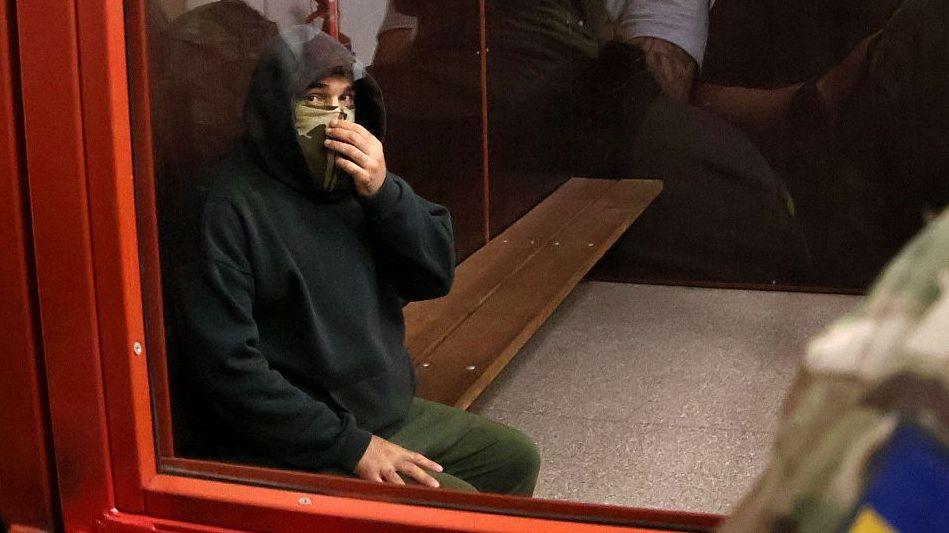
For the first time since his arrest, former Ukrainian security services officer Vitalii Zhykovych appeared before the BBC from a Kyiv prison. He claims the bomb that exploded in Monaco on 30 June 2026 – which badly wounded billionaire Vadym Yermolayev and his family – was an authorised operation carried out for the Main Intelligence Directorate of Ukraine (HUR). Zhykovych says the plan was approved by senior HUR officers and that Vladyslav Reut, an active‑duty intelligence officer, masterminded the attack and selected the bomber, Anastasia Berezovska.
In the interview, Zhykovych explained that Reut had discussed two potential targets, one of whom may have been a pro‑Russian blogger convicted in absentia. He claims he declined to use Berezovska due to her lack of training, only to be told to deploy her as a reconnaissance asset. When the weapon was planted on Yermolayev’s doorstep, the explosive detonated just as the businessman’s family was returning from an evening meal – a moment that shocked even the alleged perpetrator.
Following the blast, Berezovska fled to Germany and then to Ukraine, where she was lured into a forest by Reut and Zhykovych before being shot. The two men now blame one another for her death, but Zhykovych says the shooting was a double‑cross by HUR. He further alleges that the operation was a retaliation for Yermolayev’s alleged business ties to Russia, which the Ukrainian authorities have denied.
The HUR has filed a statement demanding “a full investigation” and “comprehensive support” for law‑enforcement bodies, while the SBU has dismissed Zhykovych as a “former law‑enforcement officer.” As the investigation continues, the case underscores the blurred lines between intelligence, criminality and geopolitics in a region still reeling from the Ukraine war.