An impending crisis over conscripting ultra-Orthodox Jews into the Israeli army is threatening to undermine Israel's government and split the country.
Public opinion on the issue has shifted dramatically in Israel after two years of war, and this is now perhaps the most explosive political risk facing Prime Minister Benjamin Netanyahu.
Lawmakers are currently considering a draft bill to end the exemption granted to ultra-Orthodox men enrolled in full-time religious study, established when the State of Israel was declared in 1948.
That exemption was ruled illegal by Israel's High Court of Justice almost 20 years ago. Temporary arrangements to continue it were formally ended by the court last year, forcing the government to begin drafting the community.
Some 24,000 draft notices were issued last year, but only around 1,200 ultra-Orthodox - or Haredi - draftees reported for duty, according to military testimony given to lawmakers.
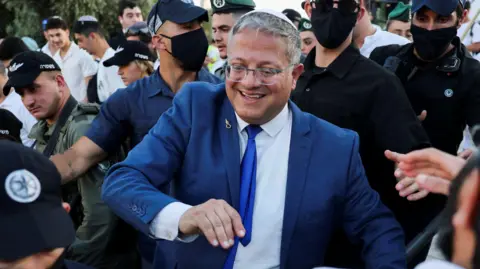
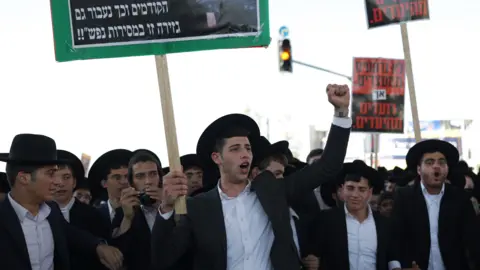
Tensions are erupting onto the streets, as lawmakers debate a new draft bill that would require ultra-Orthodox men to serve alongside other Israeli Jews. This month, two Haredi politicians faced backlash from extreme ultra-Orthodox protesters, angered over parliament's discussion of the proposed law.
A special Border Police unit recently rescued Military Police officers targeted by crowds of Haredi men as they attempted to arrest a draft-evader. These arrests have initiated a rapid response system within ultra-Orthodox communities called Black Alert to mobilize protests against such actions.
The push for increased conscription led to a massive protest in Jerusalem last month, viewed by many as part of a broader conflict regarding the identity of the Jewish state and the role of religion within it.
A plurality of public sentiment drives the discussions, with opinion polls indicating an increase in support for ultra-Orthodox conscription, with a survey revealing that 85% of non-Haredi Jews favored sanctions against draft-dodgers.
Yet, the ultra-Orthodox community remains staunchly against serving in the military, citing their religious studies as critical to Israel's safety. Rabbi Tzemach Mazuz of the Kisse Rahamim yeshiva articulated that continuous prayer protects Israeli soldiers.
Political opposition against Netanyahu's draft bill is growing, with criticism aimed at its perceived leniency towards draft exemptions. Lawmaker Boaz Bismuth is advocating for what he describes as a balanced approach that caters to both the military's needs and those of religious students.
This issue has historically threatened Netanyahu's coalition, and as divisions feel more pronounced, the ongoing discussions may either reshape Israel's identity or further exacerbate its societal rifts.