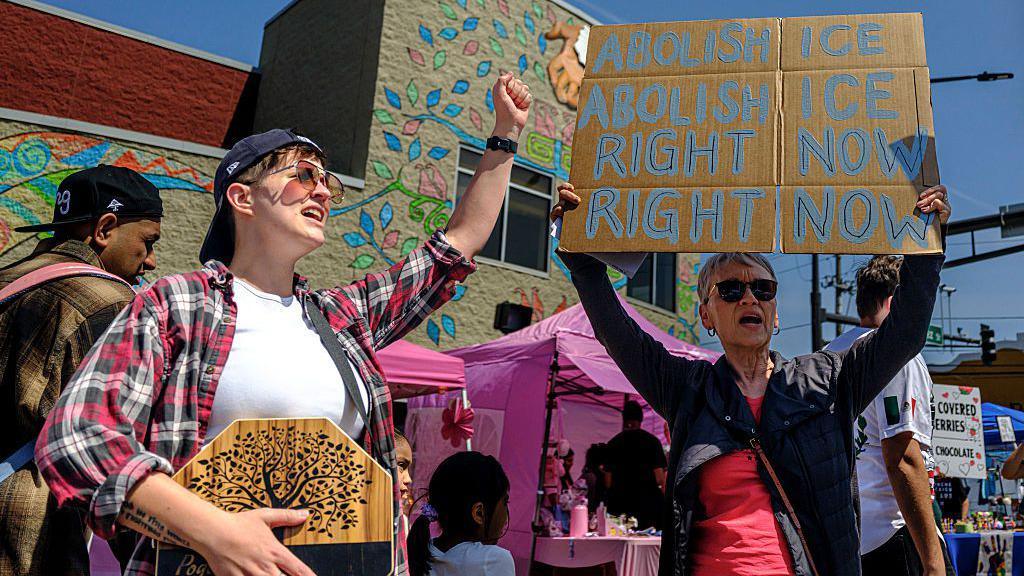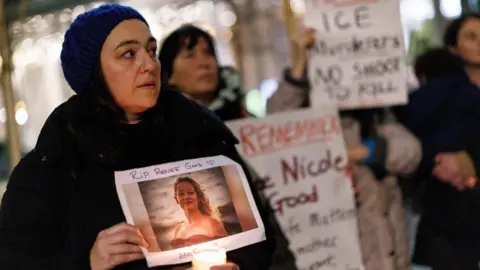
US investigators will face a host of thorny questions in determining whether the fatal shooting of a woman by a federal agent in Minneapolis last week was justified, as local and national officials recount drastically different accounts of an incident that sparked nationwide protests. Several videos have emerged showing US Immigration and Customs Enforcement (ICE) agent Jonathan Ross firing at and killing Renee Good, 37, while she was behind the wheel of her burgundy Honda in a residential neighbourhood of the northern city. President Donald Trump and his administration have described Good as a 'domestic terrorist' who was trying to run over the ICE agent, while state officials have said Good, a mother of three, was trying to leave the scene. Former law enforcement officials told the BBC that a review of the incident could plausibly find the agent was justified in using deadly force because he believed Good was a threat. But they said Trump officials' strong public statements in support of Ross in the immediate aftermath of the shooting could complicate the investigation. 'When you have that much command and influence of everyone saying (the shooting) is already justified before the facts are in... I think that's where you have problems,' former FBI special agent Robert D'Amico said.
Officials are investigating footage from multiple angles showing the moments leading to the shooting. Local and state officials have argued that these videos demonstrate that Good was not a threat as she was turning away from the agent, while federal interpretations suggest she was attempting to drive at the officer. Investigators will compare Ross's actions in these videos with the Department of Homeland Security's policy on the use of deadly force, acknowledging the complexities surrounding the justification for firing at a moving vehicle.
With Minnesota officials claiming federal obstruction in their involvement in the investigation, concerns arise regarding potential bias in the federal inquiry. Governor Tim Walz has voiced apprehensions over the implications of a one-sided investigation, and local authorities plan to conduct a separate review while suing the federal government over ICE's presence in the state. Ultimately, as the investigation progresses, the intersection of politics and law enforcement could play a critical role in shaping public perception and accountability in this high-stakes case.
Officials are investigating footage from multiple angles showing the moments leading to the shooting. Local and state officials have argued that these videos demonstrate that Good was not a threat as she was turning away from the agent, while federal interpretations suggest she was attempting to drive at the officer. Investigators will compare Ross's actions in these videos with the Department of Homeland Security's policy on the use of deadly force, acknowledging the complexities surrounding the justification for firing at a moving vehicle.
With Minnesota officials claiming federal obstruction in their involvement in the investigation, concerns arise regarding potential bias in the federal inquiry. Governor Tim Walz has voiced apprehensions over the implications of a one-sided investigation, and local authorities plan to conduct a separate review while suing the federal government over ICE's presence in the state. Ultimately, as the investigation progresses, the intersection of politics and law enforcement could play a critical role in shaping public perception and accountability in this high-stakes case.