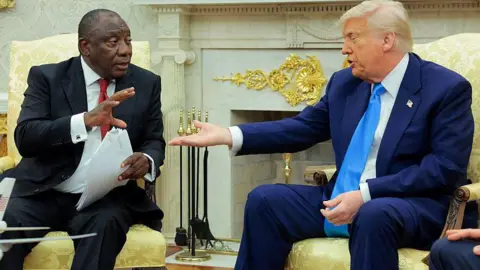
US Secretary of State Marco Rubio will meet Danish officials next week to discuss the fate of Greenland - a semi-autonomous territory of Denmark that President Donald Trump claims he needs for national security.
The vast island finds itself in the eye of a geopolitical storm with Trump's name on it, and its residents are clearly unnerved.
Yet when you fly in, it looks so peaceful. Ice and snow-capped mountains stretch as far as the eye can see, interrupted here and there by glittering fjords - all between the Arctic and the Atlantic Oceans.
It is said to sit on top of the world; much of it above the Arctic Circle.
Greenland is nine times the size of the UK but has only 57,000 inhabitants, most of them indigenous Inuit.
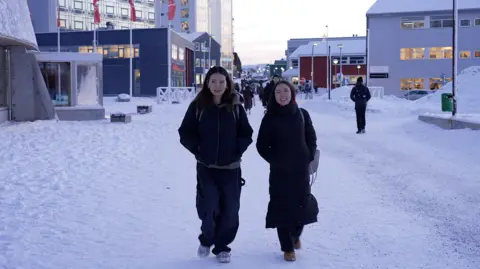
In Nuuk, the capital, a frozen twilight envelops snow-covered streets as parents drag children home on sledges. The mood is gloomy; many residents wish to avoid discussions about Trump and his recent remarks around a potential takeover by the US.
One pensioner was emphatic, stating that the US must never plant its flag in Greenland’s capital. Others echoed sentiments of fear and mistrust, with one resident expressing she was “scared to death” over the prospect of aggressive U.S. intervention.
Most Greenlanders desire independence from Danish rule, but are wary of the implications that might have for their economic welfare. The islands, rich in natural resources, continue to rely significantly on Danish subsidies to support their welfare system.
The Inuit Ataqatigiit party, a pro-independence bloc, sees the current geopolitical focus on Greenland as an opportunity to assert their voice on both domestic and international platforms.
As conversations about environmental resources, military presence, and international negotiations unfold, Greenlands' future remains uncertain in this ongoing geopolitical contest.