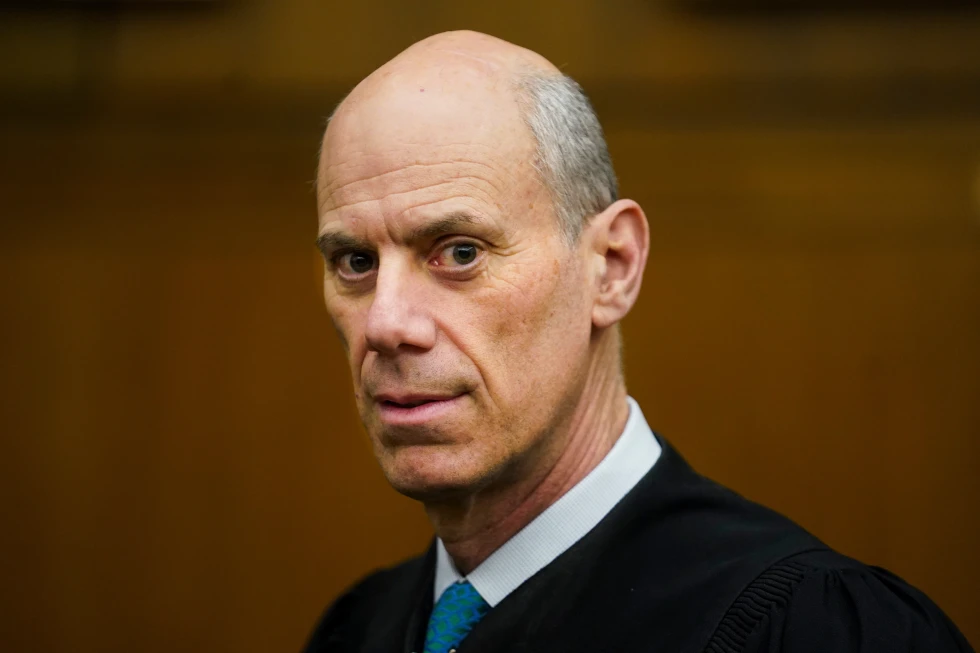
PROVIDENCE, R.I. (RTW News) — A significant victory for states refusing to cooperate with federal immigration enforcement has emerged after a federal judge halted the Trump administration's attempt to cut federal Homeland Security funding. U.S. District Judge Mary McElroy's ruling supports a coalition of 12 state attorneys general who filed a lawsuit in response to alarming reductions in federal grants attributed to their 'sanctuary' policies.
Under the proposed cuts, over $233 million would have been stripped from Connecticut, Delaware, the District of Columbia, Massachusetts, Minnesota, New York, Rhode Island, Vermont, and Washington. These funds are critical, as they are intended to enhance local police and fire departments' capabilities under a $1 billion program assessed on respective risk needs.
McElroy's 48-page ruling follows an earlier federal court decision deeming it unconstitutional for the federal government to condition disaster funding on state compliance with immigration enforcement directives. Writing in her ruling, McElroy articulated that the conditional cuts appeared arbitrary and questioned the rationale behind such drastic funding reductions.
'What else could defendants’ decisions to cut funding to specific counterterrorism programming by conspicuous round numbered amounts … be if not arbitrary and capricious?' she wrote, emphasizing the importance of proper funding to ensure public safety against possible threats. Furthermore, she pointed to recent tragic events, like the shooting at Brown University, highlighting the vital role such funding plays in emergency responses.
The judge directed the Department of Homeland Security to restore previously planned allocations, stressing the serious obligations tied to preserving the nation's security through adequate grant administration. 'Defendants’ wanton abuse of their role in federal grant administration is particularly troublesome,' she noted, advocating against linking funding with political motivations.
In reaction to the ruling, Massachusetts Attorney General Andrea Joy Campbell hailed the decision as a way to protect states from punitive actions based on their immigration stances. 'This victory ensures that the Trump Administration cannot punish states that refuse to help carry out its cruel immigration agenda,' she stated, reaffirming the commitment to sustain essential funding for disaster and emergency preparedness.
Under the proposed cuts, over $233 million would have been stripped from Connecticut, Delaware, the District of Columbia, Massachusetts, Minnesota, New York, Rhode Island, Vermont, and Washington. These funds are critical, as they are intended to enhance local police and fire departments' capabilities under a $1 billion program assessed on respective risk needs.
McElroy's 48-page ruling follows an earlier federal court decision deeming it unconstitutional for the federal government to condition disaster funding on state compliance with immigration enforcement directives. Writing in her ruling, McElroy articulated that the conditional cuts appeared arbitrary and questioned the rationale behind such drastic funding reductions.
'What else could defendants’ decisions to cut funding to specific counterterrorism programming by conspicuous round numbered amounts … be if not arbitrary and capricious?' she wrote, emphasizing the importance of proper funding to ensure public safety against possible threats. Furthermore, she pointed to recent tragic events, like the shooting at Brown University, highlighting the vital role such funding plays in emergency responses.
The judge directed the Department of Homeland Security to restore previously planned allocations, stressing the serious obligations tied to preserving the nation's security through adequate grant administration. 'Defendants’ wanton abuse of their role in federal grant administration is particularly troublesome,' she noted, advocating against linking funding with political motivations.
In reaction to the ruling, Massachusetts Attorney General Andrea Joy Campbell hailed the decision as a way to protect states from punitive actions based on their immigration stances. 'This victory ensures that the Trump Administration cannot punish states that refuse to help carry out its cruel immigration agenda,' she stated, reaffirming the commitment to sustain essential funding for disaster and emergency preparedness.