Something in Europe has snapped. Donald Trump doubled down again on Monday, in his insistence that the US needs Greenland for national security reasons.
Is he prepared to use force to seize it, journalists asked him? No comment, said the president, sending chills down the spine of Greenland's anxious inhabitants. Again.
Greenland is a semi-autonomous territory of Denmark - a member of the EU and of NATO. President Trump is now leaning heavily on Denmark's allies in both those organizations to abandon Copenhagen and let the US take control of Greenland, or face punitive taxes on all their exports to the United States.
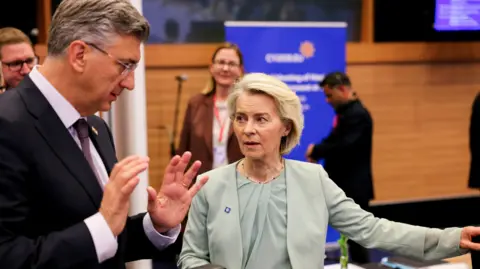
On Monday, Germany's finance minister said, we will not allow ourselves to be blackmailed after an emergency meeting with his French counterpart. The Trump threats landed like a slap in the face of European governments, who had only just settled tariff deals with the US president last year.
Suddenly, Europe is caught between supporting its allies and resisting Trump's economic threats. A recent shift in rhetoric indicates that Europe's leaders are no longer willing to simply tolerate Trump's antics; they are preparing a more robust response, which might include significant tariffs on US goods.
As diplomatic tensions escalate over Greenland, the future of transatlantic relations hangs in the balance, potentially redefining alliances and economic cooperation in an increasingly multipolar world.
Is he prepared to use force to seize it, journalists asked him? No comment, said the president, sending chills down the spine of Greenland's anxious inhabitants. Again.
Greenland is a semi-autonomous territory of Denmark - a member of the EU and of NATO. President Trump is now leaning heavily on Denmark's allies in both those organizations to abandon Copenhagen and let the US take control of Greenland, or face punitive taxes on all their exports to the United States.
On Monday, Germany's finance minister said, we will not allow ourselves to be blackmailed after an emergency meeting with his French counterpart. The Trump threats landed like a slap in the face of European governments, who had only just settled tariff deals with the US president last year.
Suddenly, Europe is caught between supporting its allies and resisting Trump's economic threats. A recent shift in rhetoric indicates that Europe's leaders are no longer willing to simply tolerate Trump's antics; they are preparing a more robust response, which might include significant tariffs on US goods.
As diplomatic tensions escalate over Greenland, the future of transatlantic relations hangs in the balance, potentially redefining alliances and economic cooperation in an increasingly multipolar world.