In brief
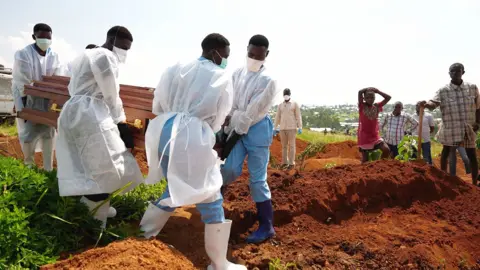
In the heart of Bunia, the Ebola outbreak has turned the city’s cemetery into a gray beacon of sorrow, with families and volunteers hastily burying loved ones under strict protocols. Joel Lonza Makumbu, a grieving father, has spent days at Nyamurongo cemetery, burying his father and mother in quick succession, underscoring how quickly the disease takes hold. WHO anthropologist Julienne Anoko and IFRC volunteers work to reconcile cultural funeral practices with infection‑control measures, offering coffins with transparent panels and body bags with clear tops, and negotiating the delicate issue of pregnant women’s burials. This story highlights the challenge of marrying deep cultural traditions with science‑driven safety, a balance that remains crucial as the outbreak continues to claim lives.
The Ouaga night of Bunia, North‑Eastern DR Congo, displays a stark new rhythm: hurried burials, few mourners, and steady, breath‑holding silence. The Ituri province has been hit by a rare strain of Ebola that claims a quarter of those infected, and the sense of loss is palpable in the Amid over 200 recent deaths.
A grave beneath a simple cemetery sign marks the story of Joel Lonza Makumbu, who stands at the freshly dug Nyamurongo cemetery for the sixth time, burying his father then turning to bury his mother. He speaks on camera about the shocking tenebrous path of the virus that took his father one week late and so many others. He tells the BBC that “Ebola is real” and warns others of the violence lurking behind disbelief.
The difference is only moments. Traditional burials in Ituri involve preparing a body in a polished gown, chanting, and days of mourn‑futures, but a body infected with Ebola must immediately be suspended in a leak‑proof plastic bag and never touched by family. Between the body bag and the coffin, a transparent panel allows mourners to see their loved one but prevents potential virus‑laden fluids from spreading.
Allen, a volunteer with the International Federation of the Red Cross, explains that each body bag now has a clear plastic top, so families can see the face inside. The coffin is placed in a line between multiple transparent panels that protect the mourners while respecting their cultural need to see a dignified body. “Our priority is to keep the community safe, yet we still honour their traditions,” he says.
Jo‑May is a WHO anthropologist who has bridged the divide between the health sector and local communities for years. Her work includes negotiating the burial of pregnant women, a deeply significant act in Ituri; the belief that the foetus should travel light in the afterlife demands careful handling of necessary bodily fluids. She explains that a child’s remains are often placed separately, yet this procedure can be risky. Still, she offers reassurance that the ancient ancestors have left a roadmap for these hardships.
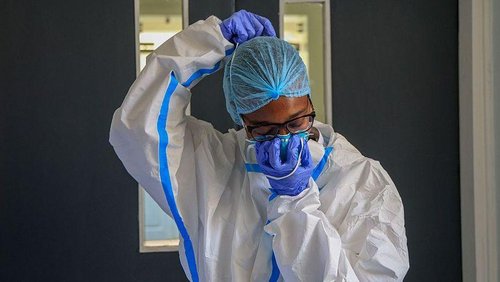
IFRC volunteers, wearing full personal protective equipment, work behind the scenes to ensure the corpse is sealed in a body bag then transferred to a coffin. Within the temporary morgue tent, the process is executed with sterile precision, and each step is decontaminated before they exit the tent into the bustling Bah, so that the risk of transmission is minimized.
The effect on families is profound. For example, a mother who lost a child despite a single week of illness walks through the cemetery to place the body heap over her four children’s secret burial stop. Her husband's voice mends the floor with facial bruising. It is, for them, a hard‑to‑hear listing memorial to the disease’s relentless afflictions.
In the end, as Joel’s neighbour waits by the newly buried mother, he worries about being called for one more burial as his relatives join treatment centres and their stories intertwine. “I have no idea whether it will be still,” he shares. The name “Ebola” is not just an infection; it is a real force that closes doors, burns husks, and now demands new funerary rituals to keep community life from falling apart.