The Kremlin is tightening its grip over what Russians can do and see online, making it harder for outlets like the BBC to reach their audiences.
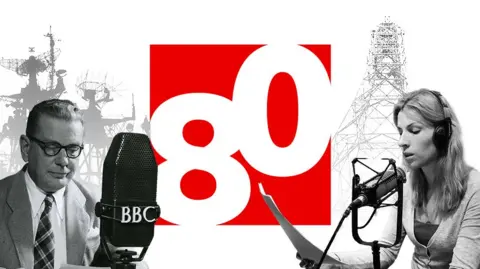
For the past 80 years BBC Russian has sought to bypass those restrictions, which for decades featured jamming of its short-wave radio broadcasts and now involve blocking its website.
The latest restrictions in Russia have included widespread mobile internet outages and a reported plan to block the Telegram news and messaging app.
On 24 March 1946, the BBC started its first regular radio broadcast in the Russian language aiming at giving listeners behind the Iron Curtain in the Soviet Union an alternative to state propaganda and a tightly controlled cultural scene.
By 1949, jamming of the signal was already the norm.
For almost half the 20th century, Soviet people had to jump through hoops to listen to foreign broadcasts, and for some, it was truly a sport. We really wanted to know what was being hidden from us, recalls Natalia Rubinstein, an ex-BBC presenter and former resident of Leningrad.
People often took their radios out of town, where jammers had less reach, to listen in peace, demonstrating a powerful desire to access uncensored information.
Jamming techniques, initially used by Nazi Germany, continued throughout the Cold War, with the BBC persevering by broadcasting its Russian-language bulletin multiple times a week.
Despite such obstacles, there were moments when BBC Russian succeeded in outsmarting the censors, such as when news of Soviet leader Leonid Brezhnev's death was broadcast without interference.
The privacy surrounding the audience continued until reforms in the late 1980s when listeners began to provide feedback, demonstrating the necessity of the service amidst changing political climates.
As Russia launched its full-scale invasion of Ukraine in 2022, BBC Russian experienced a tremendous surge in its audience, only to face new obstacles with website blocks labeling it as spreading false information.
BBC Russian journalists have faced personal costs, having to leave Russia to maintain their work while remaining engaged with their audience. Despite an uphill battle against state censorship, the service continues to resonate with millions of Russians seeking independent reporting.
Their story is a testament to the tenacity of journalism in the face of repression, proving the need for BBC Russian is as strong today as it was in 1946.