In brief
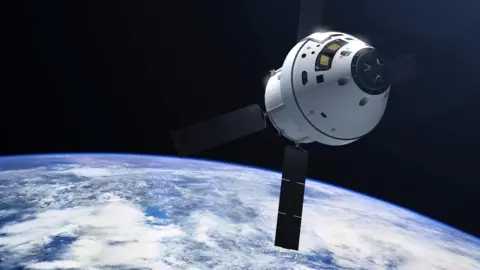
The Artemis II mission's four astronauts have exited Earth's orbit after a flawless main engine burn, setting them on a trajectory towards the far side of the Moon. This mission represents humanity's first venture beyond Earth’s orbit since 1972, with the crew expected to travel further from Earth than any human has been before.
The four astronauts on the Artemis II mission have now left Earth's orbit, after their Orion spacecraft fired its main engine for a final push towards the Moon. The five minute and 55 second engine burn, known as the translunar injection (TLI), went 'flawlessly', according to NASA's Dr. Lori Glaze. Canadian astronaut Jeremy Hansen stated, 'We're feeling pretty good up here on our way to the Moon'.Artemis II is now on a looping path that will carry the crew around the Moon and back again, marking the first time humans have traveled outside of Earth’s orbit since 1972. During this historic journey, imagery from the Orion capsule showcases Earth gradually shrinking as it moves deeper into space.Hansen, the first non-American to journey to the Moon, expressed the weight of responsibility on their shoulders saying, 'Humanity has once again shown what we are capable of.' After a series of tests and checks for the Orion spacecraft, the final approval was given for the engine burn that commenced their journey.The TLI is crucial for this mission and propelled the spacecraft on a path that is expected to take the crew more than 4,700 miles (7,600 km) beyond the Moon. NASA anticipates this could surpass the distance record set by Apollo 13 in 1970, depending on timing and trajectory. Despite the high stakes, flight controllers can still execute a fast return home if necessary within the mission's first 36 hours.As Orion ventures further into space, crew members can look forward to breathtaking views of the Moon eclipsing the Sun, as they witness a unique solar event on the sixth day of their mission. This mission signifies a giant leap closer to future lunar landings, leaving behind a legacy of exploration and discovery.