In brief
The Artemis II mission has successfully tested the Orion spacecraft with its crew aboard, showcasing both the vehicle's performance and the human aspect of space travel. While challenges remain, the mission has generated optimism about achieving a Moon landing by 2028. This report examines the mission's achievements and what they mean for the future of human space exploration.
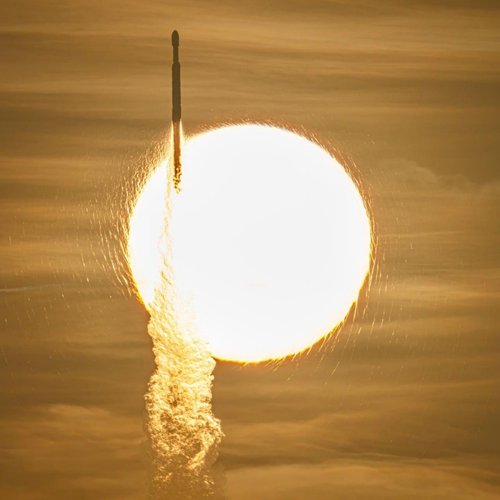
NASA's Artemis II mission has passed every major test since its launch on April 1, with its rocket, spacecraft, and crew performing better than engineers had dared to hope for. The mission's first six days have shown that the Orion capsule works as designed with people on board for the first time—something no simulator could have proven.
Perhaps its greatest achievement is the inspiration it has generated globally, providing hope and agency in these challenging times. However, the burning question remains: is a Moon landing by 2028, as NASA and the current U.S. administration aspire to, truly an achievable goal?
What Artemis II Has Taught Us So Far
Shortly after NASA's Space Launch System (SLS) reached the launch pad at Kennedy Space Center, a critical lesson about Artemis II was learned. NASA Administrator Jared Isaacman emphasized that launching a complex rocket like the SLS every three years is not sustainable. The new approach indicates a shift from treating each rocket as a rare artifact toward normalizing the frequency of launches.
In just six days since the crew, comprising Reid Wiseman, Victor Glover, Christina Koch, and Jeremy Hansen, launched, the mission has outperformed expectations. The SLS generated a staggering 8.8 million pounds of thrust at liftoff, and every phase of the ascent was described as 'nominal.'
A Rocket that Did the Job
Following the successful launch, the Orion spacecraft executed a critical burn, establishing a looping path to the Moon without necessitating further major adjustments. This journey into Earth orbit showcased the spacecraft's capabilities and reliability under real conditions.
Humans in the Machine
The mission's official aim was to observe the interactions between crew and spacecraft mechanics. It exposed both expected and unexpected challenges, such as minor system issues, highlighting the importance of human elements in space travel. Engineers have been monitoring critical systems to affirm that Orion can safely transport individuals to the lunar surface.
The Biggest Test to Come
The mission is not yet concluded. Orion is on course for a splashdown in the Pacific Ocean on April 11. The re-entry into Earth’s atmosphere poses significant risks and will ultimately define the mission's legacy. If this phase goes well, Artemis II could pave the way for future lunar missions. Optimism is rising, but the path to a Moon landing in 2028 is still seen as a complicated endeavor.
Artemis II marks a moment of inspiration for humanity, showcasing how space exploration can unify us, similar to the sentiments during the Apollo era amidst global turmoil. This mission is a critical stepping stone, not just towards one lunar landing, but towards many more in the future.