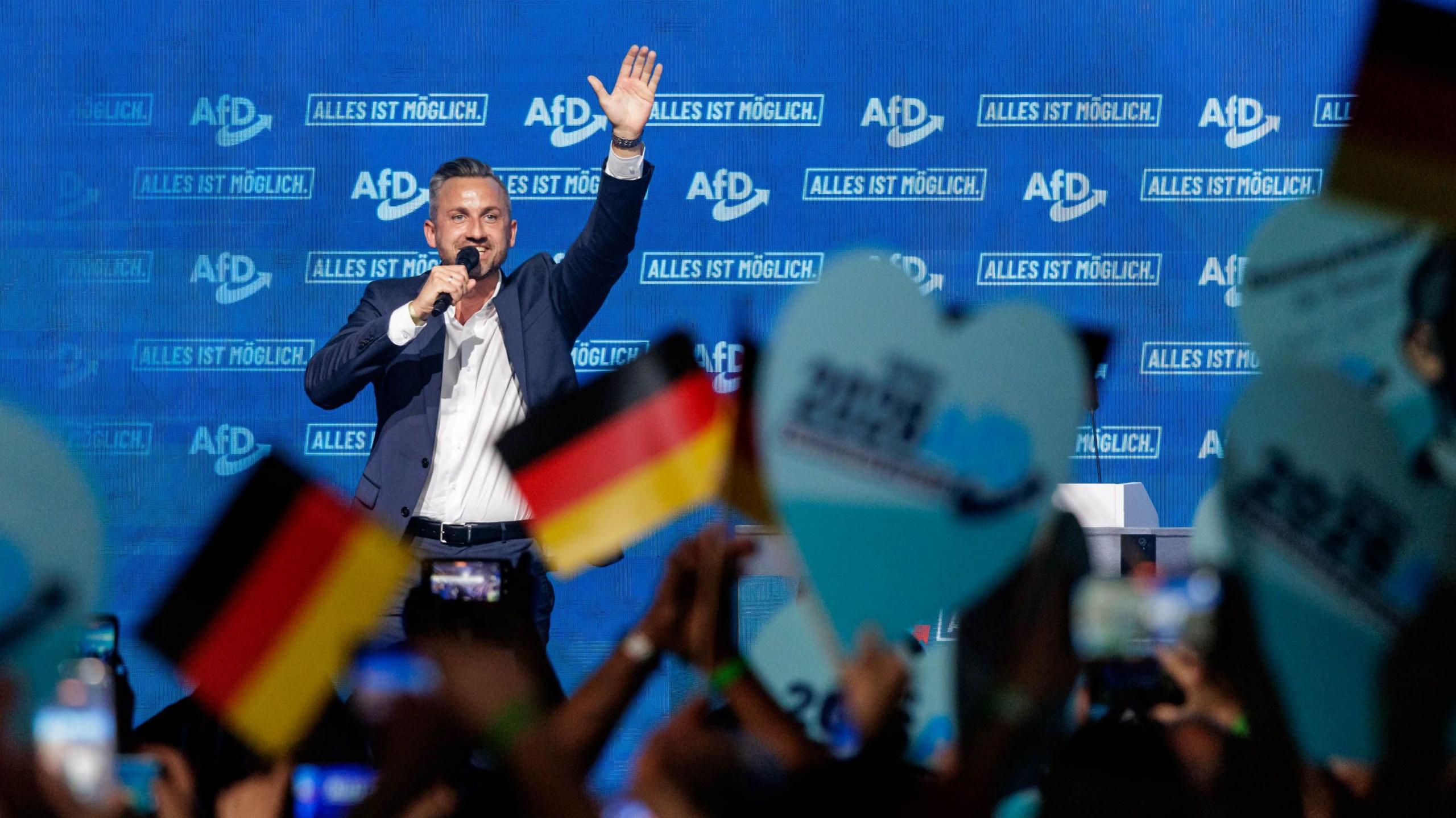
Germany’s eastern states are holding their breath as the October 26 vote in Saxony-Anhalt could mark a historic moment for the country’s politics.
The Alternative for Germany (AfD) is campaigning for a full parliamentary majority in the state’s legislature. If successful, it would be the first time a far‑right party has held power at the state level in post‑war Germany.
The drive is seen by critics as a stepping stone toward national influence. At the same time, the party’s leadership sees it as a means to tackle long‑standing grievances in the east, such as high energy costs, sluggish economy, and a perceived drift towards foreign aid.
Chancellor Friedrich Merz of the Christian Democratic Union (CDU) faces internal pressure and waning popularity, with some questioning his ability to finish his term. Local supporters, however, have given AfD’s lead candidate Ulrich Siegmund – a 35‑year‑old avid social‑media user – the image of a charismatic champion who will deflect contested immigration and security issues.
Siegmund’s campaign includes provocative messaging: segregating refugee children into temporary classes, banning LGBT rainbow flags from schools, and repurposing curriculum to emphasize so‑called ‘positive’ aspects of German history.
The AfD’s reach extends beyond policy. The party’s alleged pro‑Russia leanings have raised concerns about its suitability for sensitive intelligence work. In Berlin, a Russian army mug found in the office of party figure Hans‑Thomas Tillschneider sparked debates about Moscow’s influence on German politics.
German security experts warn that Russia‑backed disinformation campaigns are intensifying, especially against political rivals. An allegedly anti‑Russian hysteria has been cited as an attempt to shape public opinion on the AfD’s platform.
Saxony-Anhalt’s government wields considerable authority over local education, policing, and culture, and its representatives sit in the federal upper house (Bundesrat). A provincial victory would thus boost the AfD’s national voice.
Despite being classified by domestic intelligence as a right‑wing extremist group, the AfD denies any “national socialist” symbolism and disputes historic comparisons. Their conviction that they can “take the sky home” resonates with voters who feel ignored by mainstream parties.
The outcome may either keep the far‑right on the periphery or force it to element a coalition strategy. Either way, the state’s 5‑percent electoral threshold will decide whether smaller parties can help or hinder a party‑majority scenario.
As the win would give the AfD a platform to retort to national leaders directly, many fear that a decisive state victory would deepen ideological divides across the country.
In either case, this election stands as a litmus test for Germany’s democracy and its ability to repel extremist politics, especially in the wake of the post‑war constitutional safeguards.