In brief
The city council is considering a controversial proposal to prohibit Russian‑language content in music, literature and public institutions, reflecting Ukraine’s broader drive to assert Ukrainian language dominance. While the ban would not affect private use, it would curb performances of Russian songs and remove Russian books from public display. The move faces strong local opposition from artists and residents who see it as censorship, yet supporters argue it protects national identity against Russian influence.
Odesa, Ukraine’s third‑largest city on the Black Sea, is slated to decide this week whether it will adopt a banning plan for Russian‑language content in public arts and cultural venues.
\The council’s proposal would expands the national restrictions already in place: it would prohibit Russian songs, literature and language use in street‑level performances, parks, public institutions and state‑run theatres, and would encourage private venues to follow suit. Ordinary private conversations in Russian would remain allowed, but public-speaking venues would need to switch to Ukrainian.
\Odesa is a predominantly Russian‑speaking city, yet Ukrainian is the state language. Many Odesans have voluntarily shifted towards Ukrainian since the Russian invasion began in 2022, with a national poll in 2022 showing 80% support for Ukrainian authority in “all spheres of communication.” However, recent surveys show many young Ukrainians still prefer to speak Russian during social breaks.
\Local voice: Odesa lawyer Artem Kartashov says the ban is a “necessary step to stop Russian propaganda,” while comedian Borys Barsky argues that Russian is a literary language, not a weapon, and that only the Kremlin benefits from sowing discord. Barsky, who runs the Mask Theatre, notes that the theatre’s multilingual sign was penalised for breaking the law because it used Russian.
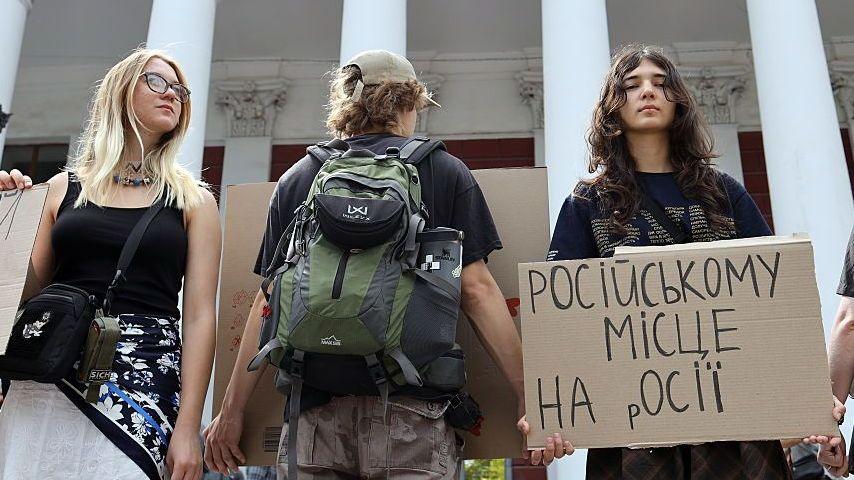
\The move is contested by a faction of council members linked to former mayor Hennadiy Trukhanov, and by artists and visitors who see the ban as a threat to cultural freedom. Some Ukrainian‑speaking scholars argue the ban pressures addicts to earn argumentative power, while others see it as a chance to reshape public space into a language that reflects the nation’s independence and will help future generations grow as Ukrainian.
\\If passed, the new language policy would likely see private shops and restaurants as well to align with public compliance, as the language ombudswoman Anna Nerush said that businesses seek official permits and would thereby adjust to council decisions even without punitive measures.
\Against the backdrop of ongoing Russian strikes on Odesa, the debate reflects the city’s struggle to balance historical Russian heritage with active national defence and identity building. Some residents embrace the mayor’s call for de‑colonisation and assert that a truly democratic Ukraine must uphold freedom of expression and not enforce punitive language limits.
\For more on this story, check out interviews with local artists and government officials on our live‑streaming platform, where you can follow the council’s proceedings in real time.
\