In brief
During a visit to Doha, Emmanuel Macron accused foreign politicians of exploiting France’s recent riots for electoral gain, naming Netanyahu and Trump as examples. He warned that the unrest had been amplified by AI‑generated fake videos, which politicians used to stir public anger. EU regulators are now probing possible Russian, Iranian and Algerian disinformation campaigns that spread the barrage. Amid the chaos, a viral AI image of an elderly couple being robbed openly circulated, further intensifying the debate over media manipulation.
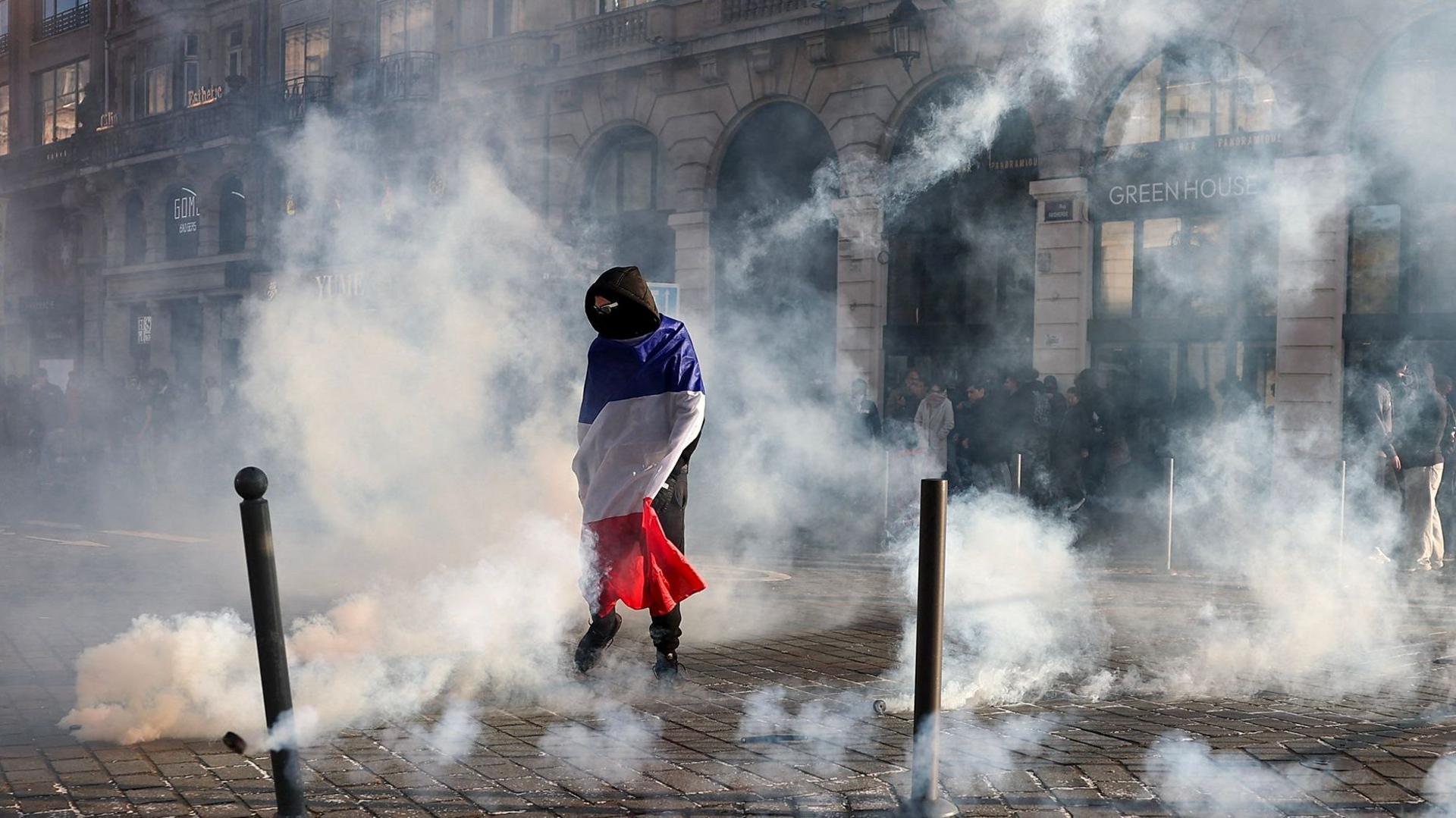
French President Emmanuel Macron accused foreign leaders of exploiting the nationwide riots to advance their political agendas during a speech in Doha, Qatar.
Macron implied that political figures, including Israeli Prime Minister Benjamin Netanyahu and U.S. President Donald Trump, were monitoring the unrest to use it as a pretext for campaigning against France.
He warned that the violence had been amplified by AI‑generated fake videos, which politicians referenced in their public remarks. Those videos, which were shared widely on social media, often carried misleading captions and appeared to depict scenes that never occurred.
EU regulators have opened investigations into potential interference from pro‑Russian, Iranian and Algerian online networks, with experts noting that former campaigns such as Storm‑1516 have a history of spreading disinformation to create social discord.
In the wake of the unrest, a viral picture purporting to show an elderly couple robbed and left in their underwear in Paris went viral. BBC Verify traced the image to a site run by Infos‑Israel.News, where it was produced using ChatGPT without a baseline reference, and later shared on X without any AI disclaimer, amassing more than six million views.
The scandal reflects growing concerns over the role of artificial intelligence in shaping political narratives and the speed with which fabricated content can spread across platforms. Macron called for unwavering action against “ultra‑left fringe groups” while also urging global cooperation to counter the spread of false information that threatens social cohesion. France’s disinformation response will likely become a priority as the country faces both domestic unrest and international scrutiny of its media landscape.