In brief
Following President Luiz Inácio Lula da Silva’s re‑election, U.S. immigration attorneys report more than 1,300 new inquiries in a single day, mainly from families with capital and high‑skill workers. Google searches for moving to neighboring South America, Portugal, Canada, and the U.S. skyrocketed, prompting concerns about future housing and public‑service pressures in those destinations. While firms confirm a sharp rise, analysts caution that the long‑term impact remains uncertain.
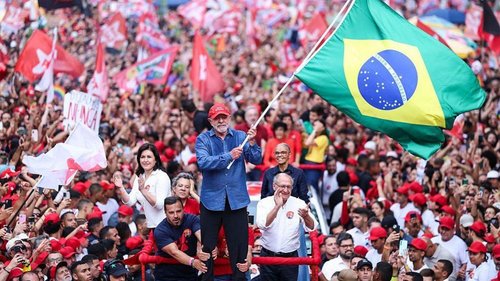
After President Luiz Inácio Lula da Silva won a historic fourth term on Sunday, U.S. immigration lawyers saw a sudden, large‑scale spike in inquiries from Brazilian families and skilled workers looking to relocate abroad. Two firms in Florida recorded more than 1,300 requests in a single day, a jump from their usual 500 to 600 monthly average.
Miami‑based Piquet Law Firm stated it received 700 inquiries Monday, compared with its typical monthly volume, while Orlando’s Bicalho Legal Consulting logged 643 for the same day versus a daily average of 20, according to founders Alexandre Piquet and Vinícius Bicalho.
Both attorneys note that interest in moving abroad typically rises after elections, but this surge was unusually large. D4U Immigration reported a 2,154% increase in daily queries versus its normal volume. The firms say most of the inquiries come from families able to invest in the United States and from highly skilled professionals evaluating U.S. visa programs; Piquet noted that 150 of the 700 prospective clients appeared to qualify for visa programs.
Google Trends data confirm the spike in searches for relocation. Brazilian news outlet CityTudo reported that searches for moving to Paraguay jumped 7,600% on Oct. 26–27, compared with the week before, while searches for Uruguay rose 3,200% and Chile 1,700%. Searches for Portugal, Canada and the United States also increased sharply.
Financial newspaper Valor Econômico found a 1,700% rise in searches for the phrase “como morar no Paraguai” immediately after the election, indicating a surge in interest for that specific destination.
Oscar Mersan De Gásperi, director of consulting firm M360 Paraguay, warned that Lula’s re‑election could trigger the largest wave of Brazilian immigration in Paraguay’s history and could strain the country’s housing and services. His assessment is presented as an expert prediction; the actual impact remains unconfirmed.
In a separate development, Indonesian President Prabowo Subianto congratulated Lula on his victory and urged both countries to deepen strategic partnership and tackle shared challenges. The post confirms the global attention elicited by Lula’s re‑election but does not address migration trends.