June 11, 2025, 10:01 p.m. ET
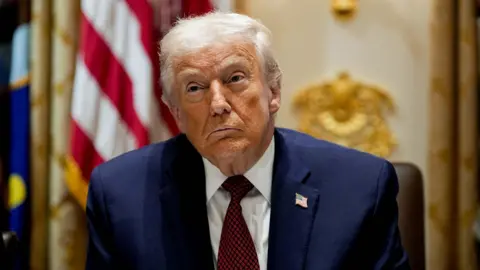
In a significant move, the Trump administration has initiated a review of the Aukus security pact established between the United States, the United Kingdom, and Australia, which aims to provide Australia with nuclear submarines. This examination seeks to ensure the agreement resonates with President Trump's "America First" doctrine, according to a U.S. defense official communicating on Wednesday.
Originally negotiated during President Biden's tenure in 2021, the Aukus deal served to bolster defenses against China’s expanding military clout in the Asia Pacific region. The current administration's review is indicative of Trump's critical stance towards traditional alliances, pushing for increased defense spending from partner nations.
A senior Pentagon official noted that the review aims to establish that the Aukus pact maintains "common-sense, America First criteria"—prioritizing the readiness of U.S. forces, the obligations of allies, and the needs of the American defense industrial base. This review was initially reported by The Financial Times.
Australia’s Defense Minister Richard Marles confirmed that both the U.K. and Australia are informed about the review process and reiterated the commitment of all three nations to the Aukus agreement. "We’ve been aware of this for some time. We welcome it," Mr. Marles stated during an ABC Melbourne radio interview. He characterized it as a standard procedure for an incoming administration.
As regional dynamics evolve, Australia considers the Aukus agreement central to its future defense infrastructure against an increasingly assertive China. The nuclear submarines promised under this pact would significantly enhance Australia’s operational range far beyond that of conventional vessels.
Under the terms of the agreement, Australia is expected to receive secondhand Virginia-class nuclear submarines from the United States in the 2030s while simultaneously expanding its capability to construct its own submarines following a British design. However, there are growing apprehensions in both Washington and Canberra regarding the U.S.'s capacity to promptly build new submarines to ensure a continuous fleet supply.
Elbridge Colby, the U.S. undersecretary of defense for policy, expressed concerns regarding the feasibility of the agreement during his Senate confirmation hearing in March, emphasizing the need for a sufficient and timely production of submarines. "If we can produce the attack submarines in sufficient number and sufficient speed, then great," Colby remarked. "But if we can’t, that becomes a very difficult problem."
Even prior to the announcement of the review, there were rising fears in Australia about the reliability of its long-standing relationship with the United States, especially in light of the new administration's relationship with its allies. Nonetheless, Minister Marles expressed confidence in the execution of the Aukus agreement, suggesting it aligns with U.S. interests to collaborate with Australia strategically.
Reporting by Michael D. Shear in Washington contributed to this update. Victoria Kim is the Australia correspondent for The New York Times, reporting from Sydney on matters regarding Australia, New Zealand, and the Pacific region.
In a significant move, the Trump administration has initiated a review of the Aukus security pact established between the United States, the United Kingdom, and Australia, which aims to provide Australia with nuclear submarines. This examination seeks to ensure the agreement resonates with President Trump's "America First" doctrine, according to a U.S. defense official communicating on Wednesday.
Originally negotiated during President Biden's tenure in 2021, the Aukus deal served to bolster defenses against China’s expanding military clout in the Asia Pacific region. The current administration's review is indicative of Trump's critical stance towards traditional alliances, pushing for increased defense spending from partner nations.
A senior Pentagon official noted that the review aims to establish that the Aukus pact maintains "common-sense, America First criteria"—prioritizing the readiness of U.S. forces, the obligations of allies, and the needs of the American defense industrial base. This review was initially reported by The Financial Times.
Australia’s Defense Minister Richard Marles confirmed that both the U.K. and Australia are informed about the review process and reiterated the commitment of all three nations to the Aukus agreement. "We’ve been aware of this for some time. We welcome it," Mr. Marles stated during an ABC Melbourne radio interview. He characterized it as a standard procedure for an incoming administration.
As regional dynamics evolve, Australia considers the Aukus agreement central to its future defense infrastructure against an increasingly assertive China. The nuclear submarines promised under this pact would significantly enhance Australia’s operational range far beyond that of conventional vessels.
Under the terms of the agreement, Australia is expected to receive secondhand Virginia-class nuclear submarines from the United States in the 2030s while simultaneously expanding its capability to construct its own submarines following a British design. However, there are growing apprehensions in both Washington and Canberra regarding the U.S.'s capacity to promptly build new submarines to ensure a continuous fleet supply.
Elbridge Colby, the U.S. undersecretary of defense for policy, expressed concerns regarding the feasibility of the agreement during his Senate confirmation hearing in March, emphasizing the need for a sufficient and timely production of submarines. "If we can produce the attack submarines in sufficient number and sufficient speed, then great," Colby remarked. "But if we can’t, that becomes a very difficult problem."
Even prior to the announcement of the review, there were rising fears in Australia about the reliability of its long-standing relationship with the United States, especially in light of the new administration's relationship with its allies. Nonetheless, Minister Marles expressed confidence in the execution of the Aukus agreement, suggesting it aligns with U.S. interests to collaborate with Australia strategically.
Reporting by Michael D. Shear in Washington contributed to this update. Victoria Kim is the Australia correspondent for The New York Times, reporting from Sydney on matters regarding Australia, New Zealand, and the Pacific region.