In brief
Australia's recent social media ban for under-16s has raised eyebrows as gaming platforms remain unaffected. Critics, including health professionals, highlight the addictive nature of gaming and its risks, questioning the rationale behind exempting gaming from the ban.
Wednesday afternoons have become a ritual for 15-year-old Sadmir Perviz. It's a circuitous route from home in Perth to the Fiona Stanley Hospital - but it's worth it, he says, to sit down for a game of Dungeons & Dragons with people he may not know but with whom he shares a great deal in common.
Sadmir and his board game companions are among 300 patients at the gaming disorder clinic, Australia's only publicly-run institution of its type, helping patients wean themselves off excessive online gaming habits.
The room where they meet is a simple space in a faceless hospital, but in the corner, there's a pile of board games on a chair. Jenga, Uno and Sushi Go are also popular choices at the informal group attended by both patients and clinicians.
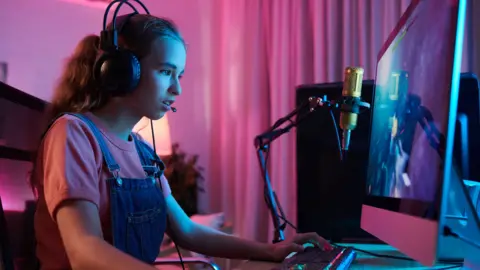
It's a bit of a departure for the 15-year-old who until a couple of months ago preferred to play games with friends online for 10 hours a day.
"It feels completely different," says Sadmir. "You get to roll the dice instead of clicking a button. You can interact with people, so you actually know who's there rather than just being on a call with random people."
Dr. Daniela Vecchio, the psychiatrist who set up the clinic, emphasizes while gaming isn't inherently bad, it can lead to addiction. As Australia's government implements a ban on social media for under-16s, many are questioning why the same criteria does not extend to gaming platforms.
The ban prevents teens from having accounts on social media platforms including Instagram, Snapchat, and X, while still allowing access to platforms like YouTube and TikTok. Critics, including Dr. Vecchio, wonder why gaming platforms were excluded from this measure, asserting that both gaming and social media pose similar risks to children.
"It doesn’t make much sense," Vecchio states. "Gaming and social media are so interconnected, it's very difficult to separate."
Gaming platforms like Steam, Roblox, and Discord have faced criticism over child safety, particularly concerning harmful content and inappropriate interactions. Some experts argue that the social media ban is too blunt, suggesting that a nuanced approach is required to address the complexities of online interaction.
As the debate over online safety continues, families are already lining up for treatment at the gaming clinic, highlighting an urgent need for better regulation around both gaming and social media to safeguard children.