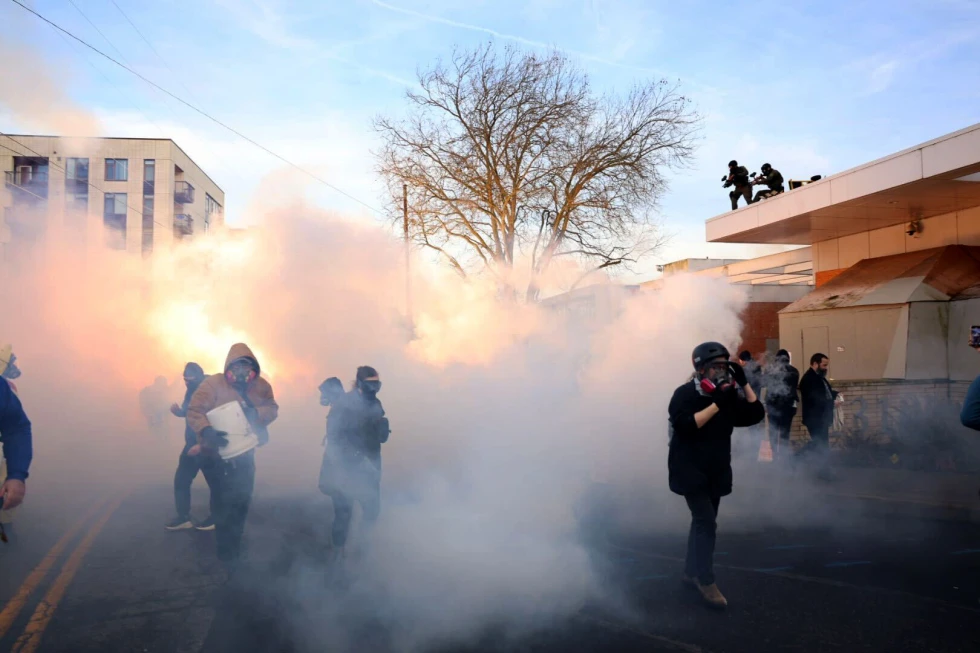
MADISON, Wis. (RTW) — A divided Wisconsin Supreme Court voted on Wednesday to take on a high-profile case brought by the American Civil Liberties Union (ACLU) on behalf of the immigrant rights group Voces de la Frontera, contesting the legality of local jails holding immigrant detainees at the request of federal authorities. This decision comes amidst intensified federal immigration enforcement actions occurring in several cities including Chicago and Charlotte, with anticipation of more operations targeting communities like the Somali population in Minnesota. Protests and lawsuits have emerged in response to these tactics.
The Wisconsin Supreme Court's majority, composed of liberal justices, agreed to hear the ACLU's case as an original action rather than having it navigate through lower courts first. Among the four justices who favored proceeding with the case, conservative Justices Annette Ziegler and Rebecca Bradley dissented; Justice Brian Hagedorn provided a separate commentary but did not disclose his vote.
Though none of the justices deliberated on the merits of the legal arguments during the order's discussion, this case could see a resolution as early as mid-2026, significantly sooner than conventional court processes. All briefs must be submitted within the next two months, with oral arguments anticipated early next year.
The lawsuit targets five county sheriffs in Wisconsin, alleging that holding immigrants on federal Immigration and Customs Enforcement (ICE) detainers is unlawful. A statement from Christine Neumann-Ortiz, executive director of Voces de la Frontera, highlighted, 'This is a historic step toward ensuring that Wisconsin's law protects all residents, not just those with power and privilege.' The ACLU contends that ICE detainers, which call for local law enforcement to extend a detainee's custody beyond their scheduled release for federal action, represent an illegal extension of authority without judicial backing.
As the legal situation develops, support for legislation pushing for compliance with ICE requests is apparent among Republicans, although current sentiments suggest resistance from the state's Democratic leadership. Amidst this backdrop, the upcoming court decision may set a critical precedent regarding immigrant rights and law enforcement in Wisconsin.
The Wisconsin Supreme Court's majority, composed of liberal justices, agreed to hear the ACLU's case as an original action rather than having it navigate through lower courts first. Among the four justices who favored proceeding with the case, conservative Justices Annette Ziegler and Rebecca Bradley dissented; Justice Brian Hagedorn provided a separate commentary but did not disclose his vote.
Though none of the justices deliberated on the merits of the legal arguments during the order's discussion, this case could see a resolution as early as mid-2026, significantly sooner than conventional court processes. All briefs must be submitted within the next two months, with oral arguments anticipated early next year.
The lawsuit targets five county sheriffs in Wisconsin, alleging that holding immigrants on federal Immigration and Customs Enforcement (ICE) detainers is unlawful. A statement from Christine Neumann-Ortiz, executive director of Voces de la Frontera, highlighted, 'This is a historic step toward ensuring that Wisconsin's law protects all residents, not just those with power and privilege.' The ACLU contends that ICE detainers, which call for local law enforcement to extend a detainee's custody beyond their scheduled release for federal action, represent an illegal extension of authority without judicial backing.
As the legal situation develops, support for legislation pushing for compliance with ICE requests is apparent among Republicans, although current sentiments suggest resistance from the state's Democratic leadership. Amidst this backdrop, the upcoming court decision may set a critical precedent regarding immigrant rights and law enforcement in Wisconsin.