In brief
Amid escalating tensions between the U.S. and Venezuela, locals express deep concern about food scarcity and skyrocketing prices rather than the potential for military intervention. Daily life in Caracas continues as citizens navigate economic hardships, focusing on immediate needs despite the looming threat of conflict.
While Nicolás Maduro's government lives on edge under a military threat from U.S. President Donald Trump, ordinary Venezuelans spend their time trying to figure out what to eat each day.
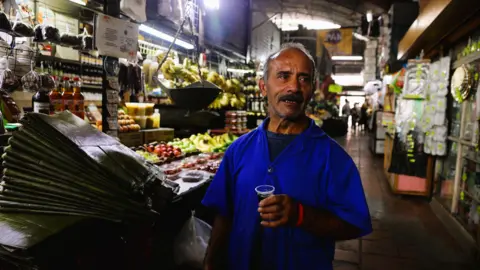
It's Wednesday morning at Quinta Crespo, a popular market in downtown Caracas. Here, a possible escalation of the conflict is not the main concern of Venezuelans, who glance at the news while checking their wallets to find enough cash to pay.
There's not going to be an intervention, nothing like that. What's really troubling us is the rise of the dollar, Alejandro Orellano tells BBC Mundo as he savours a coffee, waiting for customers who never seem to arrive.
In the past weeks, Trump's government has deployed thousands of troops and military assets to within striking distance of Venezuela, including the world's largest warship. On Saturday, at least four international airlines cancelled flights into or out of the country, according to Reuters and AFP, after a notice from U.S. aviation authorities warned of heightened military activity in or around Venezuela.
This comes after a series of U.S. airstrikes against alleged drug boats in the Caribbean and eastern Pacific. It's part of a broader effort the administration says is necessary to stem the flow of narcotics into the U.S., but Maduro insists the sabre-rattling is designed to push him out of office.
Alejandro downplays the rhetoric between Washington and Caracas. He's been selling vegetables in this market for five years. Look, look how empty this is, he insists, pointing to a long, lonely aisle full of fresh fruits and vegetables.
A Christmas carol plays, but the festive atmosphere feels overshadowed. The common enemy of the people is here: the sharp rise in food prices and the lack of purchasing power. In part, this is due to the rapid depreciation of the bolívar, which has reportedly lost 80% of its value this year, according to IMF figures.
A kilo of chicken, for example, costs about four times the official monthly minimum wage. And although the government offers bonuses to retirees and public workers, the money is still not enough to cover the basic food basket.
Consuelo, 74, is sceptical about an armed conflict with the U.S. and says Venezuelans cannot afford to stock food in preparation for a war. Let whatever happens happen! And that's it! she tells the BBC, adding that worrying about the spectre of war doesn't help much.
Much of society avoids speaking openly about issues that could be sensitive for Maduro's government, after a wave of arrests followed anti-government protests over the disputed 2024 presidential elections, which have been widely rejected by the international community. Barbara Marrero, a 40-year-old pastry chef, says: We're all waiting for something to happen because it's fair and necessary. We've been living in absolute misery for years.
With rising tensions and economic distress, Venezuelans predominantly express concerns about food security over the looming military threat, as daily life continues amidst uncertainty.