In brief
The powerful twin quakes that struck Venezuela on June 25 have kept death tolls climbing amid a nation already struggling with political uncertainty. With Nicolás Maduro recently taken to U.S. custody, Vice‑President Delcy Rodríguez has stepped into the role of interim president, delivering a televised address that highlighted a national call for unity and emergency response. The earthquake’s devastation exposes long‑standing deficiencies in infrastructure, from cracked buildings to a depleted cement supply, further strained by U.S. sanctions. Rodríguez’ willingness to accept foreign aid marks a departure from Maduro’s previous stance, promising new support for emergency services and a glimmer of hope for affected communities.
With the number of people killed in the powerful twin quakes still rising, the natural disaster is a devastating blow to a country already mired in uncertainty.
Less than six months after U.S. forces seized former President Nicolás Maduro and sent him to New York on drug‑trafficking charges, the political sphere has been dominated by Vice‑President Delcy Rodríguez, an ally of Maduro. Her recent televised address, more than two hours after the quakes, called for national unity and declared a state of emergency.
The response highlighted the severe shortcomings in Venezuela’s civil infrastructure. Long‑term shortages—worsened by U.S. sanctions—have left buildings soft and cement scarce, a legacy of an abandoned state‑owned cement industry nationalised under former president Hugo Chávez.
In a break from Maduro’s past, Rodríguez thanked foreign governments—particularly the United States, the Dominican Republic, El Salvador, and Chile—for offering assistance. She emphasised the importance of solidarity as a source of strength in moments like these.
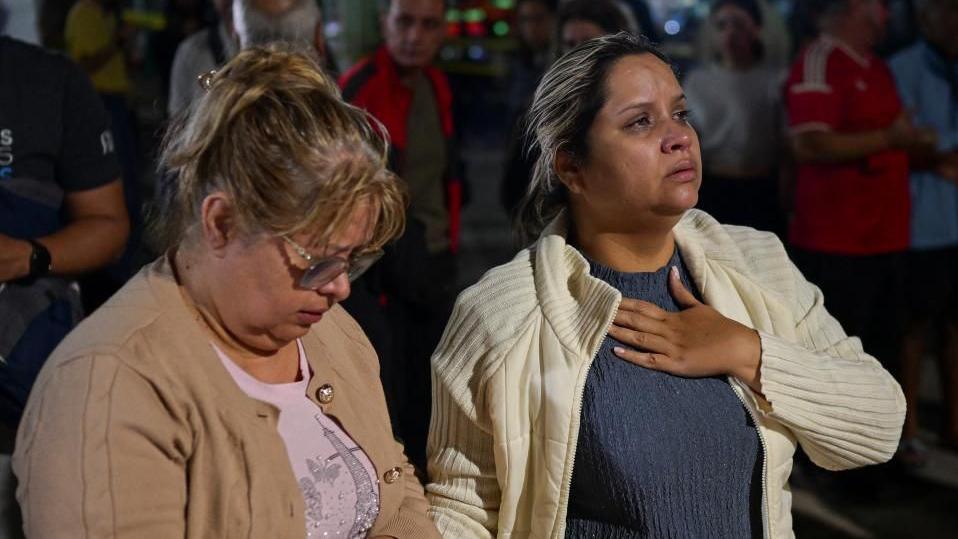
Relatives of those trapped in collapsed buildings in Caracas and surrounding suburbs await news, with volunteers and emergency services struggling under limited funding. The military focus on equipping itself has historically taken priority over civil protection units, compounding the emergency response challenges.
For Venezuelans emerging from a nightmare of wreckage, the openness to international aid offers a ray of hope amid ongoing political and economic uncertainty.
Relatives of people trapped in the rubble are anxiously waiting for news.