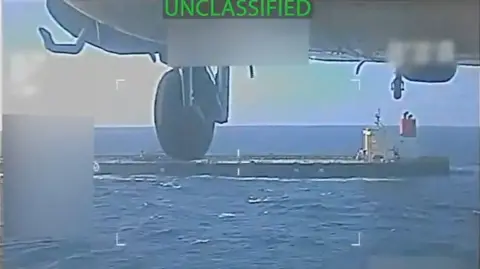
In a further escalation of tension between the United States and Venezuela, President Donald Trump has ordered a naval blockade to stop sanctioned oil tankers from entering and leaving the South American country.
Venezuela - which has the world's largest proven oil reserves - is highly dependent on revenues from its oil exports to finance its government spending.
But US sanctions targeting Venezuela's state-run oil company PDVSA have made exporting oil difficult for the Venezuelan government, leading them to resort to a fleet of 'ghost ships'.
So what do we know about these vessels and how they operate?
'Total and complete blockade'
As of last week, more than 30 of the 80 ships in Venezuelan waters or approaching the country were under US sanctions, according to data compiled by TankerTrackers.com.
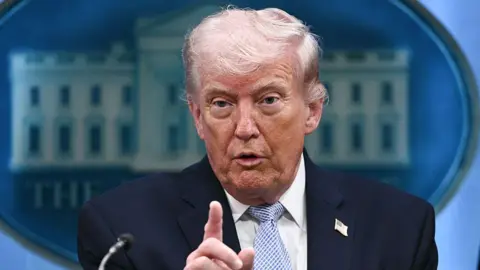
It is these vessels President Trump is targeting with the 'total and complete blockade of all sanctioned oil tankers going into, and out of, Venezuela'.
The post came less than a week after the US seized an oil tanker believed to be part of the 'ghost fleet' off the coast of Venezuela, which used various strategies to conceal its work.
Trump imposed sanctions on Venezuela's oil industry as far back as 2019, during his first term as president.
That year, Venezuelan crude exports fell by more than half from roughly 1.1 million barrels per day in January to about 495,000 by the end of 2019, according to the US Energy Information Administration.
Six years later, the sanctions remain in place but Venezuela's oil exports have grown again to around 920,000 barrels per day as of November, according to the news agency Reuters.
While this falls far short of the country's peak level of oil exports of 3 million barrels per day in 1998, this partial recovery indicates that the sanctions against Venezuela are not working as the US hoped.
It indicates that the government of Nicolás Maduro has found new ways to sell Venezuelan oil with the 'ghost fleet' at their centre.
Not unique to Venezuela
Ghost fleets are a growing phenomenon, used not just by Venezuela but also by two other oil-producing countries under Western sanctions - Russia and Iran.
Financial intelligence firm S&P Global estimates that one in five oil tankers worldwide are used to smuggle oil from sanctioned countries.
Oil sanctions aim to discourage countries or companies from buying or dealing with crude oil from sanctioned nations.
Companies and nations caught buying oil from sanctioned countries like Venezuela risk being sanctioned themselves by the US. Sanctioned countries offer their oil at steep discounts so that companies or nations are willing to take the risk of buying it.
False flags and name changes
One of the most common strategies ghost tankers use is to frequently change their name or flag - sometimes several times in a month.
For example, the tanker seized this Wednesday is called The Skipper, according to CBS News, the BBC's US partner.
The ship has been sanctioned by the US Treasury since 2022 for its alleged role in an oil-smuggling network that helps finance Iran's Revolutionary Guard and the Lebanese militia Hezbollah.
Another common trait among ghost fleet tankers is their age, with many being over 20 years old.
Another tactic used is stealing the identity of scrapped ships by using their unique registration numbers assigned by the International Maritime Organization, leading to the term 'zombie ships'.
According to a report in October by the anti-corruption NGO Transparencia Venezuela, there were 71 foreign tankers at the ports of Venezuelan state oil company PDVSA, with many operating without revealing their true locations.
Given the increased US military presence in Caribbean waters, Maduro's reliance on these covert operations may face significant curtailment moving forward.