In a surprising move, the United States announced it would stop funding South Africa’s HIV and AIDS programmes, a decision grounded in the U.S. government’s claims that the South African government has not protected the white‑minority Afrikaner community.
South Africa’s health ministry said it had not been advised of the funding cut and has been working on a self‑reliance plan for HIV care. The country already receives around £300 million a year from the President’s Emergency Period for AIDS Relief (PEPFAR), which covers roughly a fifth of its HIV budgeting.
Over 8 million South Africans are living with HIV – the highest number of any country – making the halt of U.S. aid a critical issue for public health.
After the election of President Donald Trump, the U.S.–South Africa relationship deteriorated. Trump issued a controversial executive order alleging that South Africa was sidelining white landowners and labeling the situation as a “white genocide.” The order, which also referenced South Africa’s case against Israel at the International Court of Justice and ties to Iran, led the White House to refuse further aid for what it described as “unjust and immoral practices.”
Trump’s claim of a white genocide in South Africa prompted the U.S. to set up a refugee programme for Afrikaner descendants, though the country has become the sole provider accepting refugees from South Africa. The move was followed by a boycott of the G20 summit hosted by South Africa.
Despite a temporary “bridge plan” to keep PEPFAR funding flowing until 2025, a U.S. State Department official confirmed that a phased drawdown will now begin, citing South Africa’s failure to meet requested policy changes. The U.S. stated it aimed to foster self‑reliance and reduce dependency on American support, noting South Africa’s middle‑income status and its capability to sustain its own health programmes.
South Africa’s own health ministry noted that PEPFAR’s contribution largely supports programme management, while the bulk of life‑saving antiretroviral drug purchases are funded separately by the government.
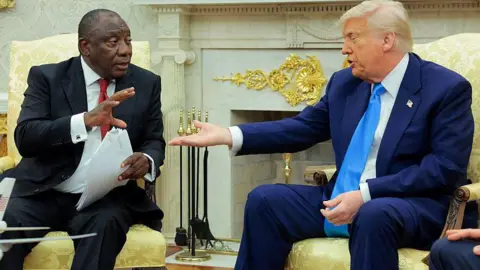
Multiple attempts to mend ties have fallen short, including a high‑profile meeting between Trump and President Cyril Ramaphosa last year in which the U.S. president confronted him with claims of white persecution.
The decision to cut funding has ignited debate over the role of U.S. aid in global health, the political dynamics of South Africa, and the future of HIV treatment in the region. Over 400 million dollars had been flowing into South Africa’s fight against HIV; the phased reduction threatens the continuity of crucial care for millions of patients.