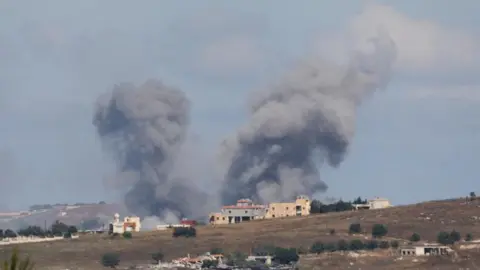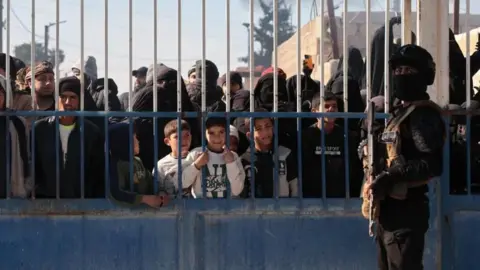
The US military has launched a mission to transfer up to 7,000 Islamic State (IS) group fighters from prisons in north-eastern Syria to Iraq, as Syrian government forces take control of areas long controlled by Kurdish-led forces.
US Central Command said it had already moved 150 IS fighters from Hassakeh province to a secure location in Iraq.
The move aimed to prevent a breakout that 'would pose a direct threat to the United States and regional security', it added.
On Tuesday night, Syria's government announced a new ceasefire with the Kurdish-led Syrian Democratic Forces (SDF) after the militia alliance withdrew from al-Hol camp, which holds thousands of relatives of IS fighters.
Separately on Wednesday, Syria's defence ministry said seven soldiers were killed in a drone attack by Kurdish forces in the Kurdish-dominated province of Hasakah.
The government and SDF had earlier blamed each other over the escape of suspected IS fighters from an SDF-run prison in Shaddadi, in southern Hassakeh.
Syria's interior ministry said on Monday night that its special forces and army soldiers had entered the town following 'the escape of around 120 [IS] terrorists' from the prison. Search operations by the security forces resulted in the arrest of 81 of the fugitives, it added.
The SDF said it had lost control of Shaddadi prison in the afternoon after 'Damascus-affiliated factions' mounted a series of attacks and killed dozens of its fighters, who it said had been attempting to 'prevent a serious security catastrophe'.
IS has been weakened in Syria but remains active, predominantly carrying out attacks against Kurdish-led forces in the north-east in 2025. The US was once the SDF's main ally in Syria. In 2025, the US and partner forces said they had detained more than 300 IS operatives in Syria and killed over 20 during the same period.
However, US special envoy Tom Barrack says the rationale for the US-SDF partnership has 'largely expired', stating that the US is currently focused on securing facilities holding IS prisoners and facilitating talks between the SDF and President Ahmed Sharaa's government.
'This moment offers a pathway to full integration into a unified Syrian state with citizenship rights, cultural protections, and political participation - long denied under Bashar al-Assad's regime,' he wrote on X.