In brief
Britain and Japan have agreed on an £18 bn investment agreement, aimed at strengthening future cooperation. Japanese firms will commit over £9 bn each to UK infrastructure, offshore wind, and financial services, creating thousands of jobs. The pact also reaffirms ties to joint defence and nuclear technology projects, while British officials highlighted the importance of the UK–Japan partnership. Analysts warn that economic headwinds, including the US‑Israel–Iran conflict, could challenge growth despite the new investment influx.
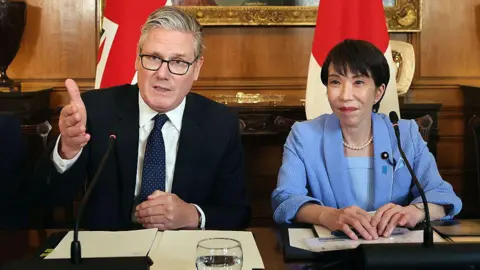
The UK and Japan have agreed on a multi‑billion pound investment deal that UK Prime Minister Sir Keir Starmer said will usher in a "new era of co‑operation" between the two nations.
Japanese firms are set to invest more than £9 bn in UK infrastructure and financial services, and up to £9 bn in UK offshore wind projects, which will create tens of thousands of jobs, Downing Street said following a meeting with Japanese Prime Minister Sanae Takaichi in London.
Beyond the core investment, the agreement reaffirmed the two countries’ support for the Gcap fighter jet programme being developed alongside Italy. Rolls‑Royce will also partner with Japan’s Atomic Energy Agency to advance next‑generation nuclear technologies, while a technology agreement will tie UK R&D and software expertise to Japanese manufacturing.
Economic challenges ahead
Although the deal could spur job creation and long‑term growth, experts predict short‑term economic pain. The UK economy grew only 0.6% in the first quarter of the year, and growth is expected to remain sluggish amid global pressures.
Analysts warn that the US‑Israel–Iran conflict will hit the UK hardest among advanced economies, according to the International Monetary Fund, and the Bank of England has projected inflation could reach 6% in a worst‑case scenario.
Labour’s shadow business and trade secretary Andrew Griffith welcomed the accord, praising the new investment, but also criticised the Labour government’s tax and regulatory policies for damaging jobs and driving people onto welfare.