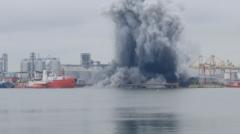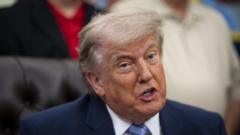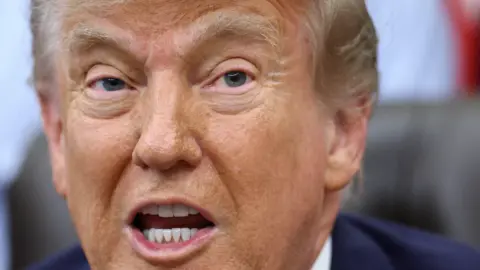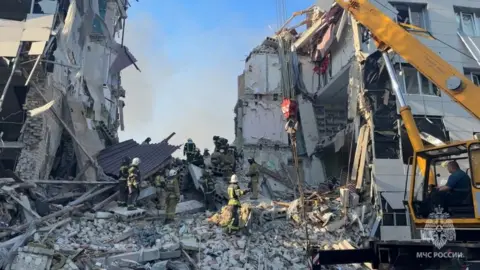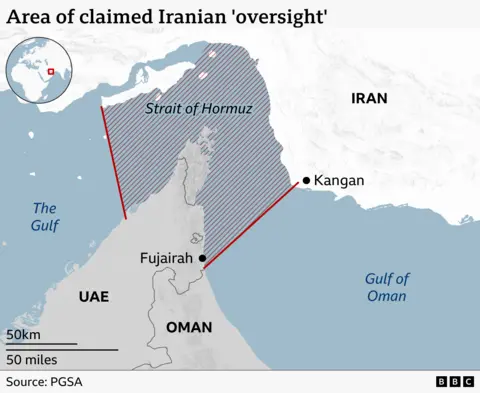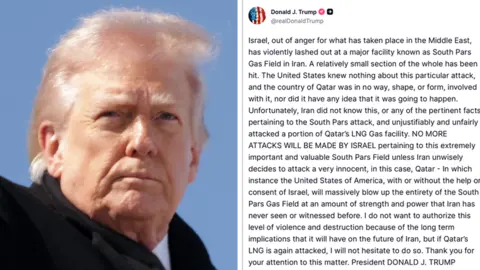
US President Donald Trump has issued a typically strongly worded statement in the wake of attacks on a major gas field shared by Iran and Qatar. Israel hit Iran's South Pars - part of the world's largest natural gas field – and Tehran retaliated by striking an energy complex in Qatar, which led to a spike in energy prices, fueling Trump's outrage.
On his Truth Social media platform, Trump threatened Iran again, stating he was unaware of Israel's plans for the attack. This has raised questions about the course of the war and the alignment of strategies between the US and Israel.
Trump's assertion that the US 'knew nothing' about the attack contrasts sharply with reports from Israeli papers indicating that the operation was coordinated in advance with the US. The president's choice of words to describe the Israeli attack as 'violently lashing out' suggests a critique of Israel's approach.
Furthermore, Trump's statement included a bold declaration that 'NO MORE ATTACKS WILL BE MADE BY ISRAEL' unless Iran 'unwisely' strikes Qatar again, indicating potential tensions or unmet expectations between the two ally nations.
While Israel maintains a consistent desire for regime change in Iran, the US appears to be more focused on limiting Iran's missile capabilities, highlighting diverging war aims.
Throughout Trump's post, he emphasizes that Iran might not have known the full circumstances surrounding the attacks. He insinuates that if Iran retaliates again, the US would decisively retaliate against the South Pars gas field, raising fears of escalating violence.
This situation puts pressure on both Trump's administration and Israeli leadership as they navigate the complexities of their alliance during an unpredictable conflict. As oil and gas prices rise due to these incidents, Trump seems to grow more impatient, indicating that the war's implications are weighing heavily on both domestic politics and international relations.