Amid the many questions swirling since last weekend's dramatic events in Caracas – and there are many – one that refuses to go away centres on the bespectacled woman now leading what US officials are calling Venezuela's 'interim authorities.'
Why Delcy?
What is it about Delcy Rodríguez, daughter of a former Marxist guerilla and deputy to ousted dictator Nicolás Maduro, that has caught the eye of the Trump administration?
And why has Washington decided on an avowed 'Chavista' revolutionary to stay in power, rather than backing the opposition leader, María Corina Machado, whose opposition movement is widely believed to have won the 2024 presidential elections?
The answer, according to one former US ambassador to Venezuela, is simple.
Charles Shapiro, who served as George W. Bush's ambassador in Caracas, explained, They've gone for stability over democracy. They've kept the dictatorial regime in place without the dictator. The henchmen are still there. I think it's risky as hell.
The Trump administration's choice reflects a preference for a stable but controversial transition rather than an uncertain and potentially chaotic shift to an opposition that represents a significant section of the Venezuelan populace.
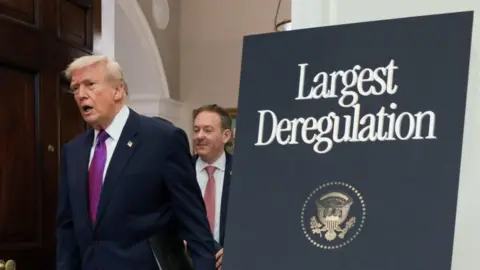
In his dramatic press conference, President Trump dismissed the highly respected Nobel Peace Prize winner Machado, labeling her as 'not respected' inside Venezuela while praising Rodríguez as 'gracious.' This has raised eyebrows and concern about the viability of democratic processes in Venezuela moving forward.
Former officials have expressed skepticism about Rodríguez's capabilities in re-establishing stability, with some suggesting there may have been prior knowledge of the government's instability. The political dynamics in Venezuela remain perilous, with significant power still resting with hardline military figures loyal to Maduro.
In this climate, the Trump administration appears to prioritize its strategic interests over a genuine push for democratic reform in Venezuela, leading to fears that the ordinary Venezuelans may continue to suffer as political realities unfold.
As international observers watch, the complexities of U.S.-Venezuelan relations will only deepen, with implications for both nations and for broader regional stability.