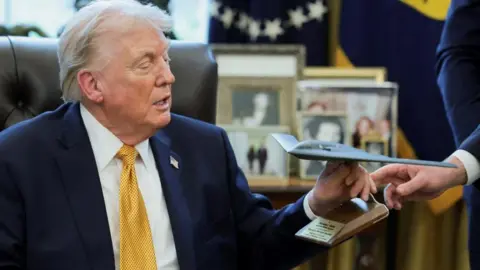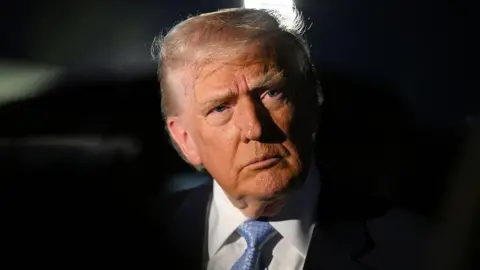
US President Donald Trump said on Monday that he is planning to delay a high stakes visit to China later in March by about a month because of the Iran war.
We've requested that we delay it a month or so, he told reporters at the White House, adding that it was important that he remained available to oversee the war.
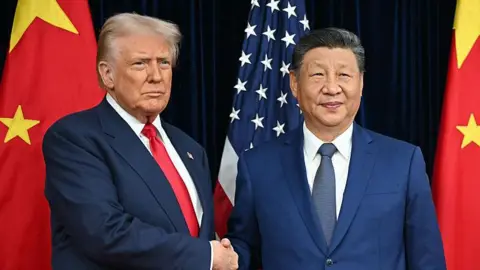
The meeting between Trump and Chinese President Xi Jinping is currently set to take place between 31 March to 2 April, following their last face to face talks in October last year.
Chinese foreign affairs spokesman Lin Jian said on Tuesday that Beijing and Washington are in talks over the timing and related matters of President Trump's visit to China.
China also rejected any connection between the delayed meeting and issues around the Strait of Hormuz - a critical waterway for global energy shipments from the Gulf.
We have noted that the US side has publicly clarified these false reports by the media, stating that the relevant reports are completely wrong, and emphasised that the visit has nothing to do with the issue of the open navigation of the Strait of Hormuz, Jian said.
On Sunday, Trump told the Financial Times he might postpone the meeting if China did not help unblock the Strait of Hormuz. But on Monday, he said he had proposed the delay solely to make sure he was around to manage the war.
I'm looking forward to being with him, he said, referring to Xi. We have a very good relationship.
There's no tricks to it either, Trump added. It's very simple. We've got a war going on. I think it's important that I be here.
The Iran war has eclipsed most of Trump's other foreign policy priorities, faced with an intensifying conflict and disruptions to the global oil supply, which has threatened to raise prices in the US.
US Treasury Secretary Scott Bessent said on Monday that the meeting's delay would not be due to Washington's request that Beijing help in the Gulf, or any trade disagreements.
Bessent said: The President wants to remain in DC to coordinate the war effort... Travelling abroad at a time like this may not be optimal.
Trump's remarks come as frictions between the world's two largest economies have grown, fuelled by the Iran war.
Beijing is a major buyer of Iranian energy exports and has criticised the US and Israeli strikes against the country.
Washington also announced it would investigate trade practices among a list of countries, including China, after Trump’s signature tariff policy was struck down by the Supreme Court in February.
Representatives from the US and China have met in Paris in recent days for negotiations, such as over investments, tariffs and economic sanctions.
The sides reached consensus on some issues and will carry on with negotiations, Chinese trade representative Li Chenggang was quoted as saying in state media outlet Xinhua on Monday.
US representatives briefed their Chinese counterparts on changes to Washington's tariff measures, said Li.
Chinese negotiators expressed serious concern about Washington's plans to probe the country's trade practices and urged the US to maintain economic stability, he said.